(RNS) — The late theologian Gerard Mannion called the Roman Catholic Church’s Pastoral Constitution on the Church in the Modern World, or “Gaudium et Spes,” the most impactful Second Vatican Council document for the church’s relationship with the wider world.
The document turns 60 years old on Dec. 7, coinciding with the 60th anniversary of the Second Vatican Council ending on Dec. 8. The anniversary offers an opportunity to reflect not just on what it says, but on the young papacy of Leo XIV.
The most challenging thing about “Gaudium et Spes” is the most subtle part of its name — the word “in.” The church was born in a hostile Roman Empire where persecution compelled Christians to keep themselves apart from the world. After Christianity was adopted by Rome, the church began to collaborate with civil authority, but the church’s authority always was understood as greater.
Seeing the church as above or apart from the world governed by civil authorities persisted until quite recent history. Placing the church in the world as “Gaudium et Spes” did challenged how the Roman Catholic Church has defined itself fundamentally.
For as long as the church could think of itself as apart from or above the world, it was easy to think about it as “immortal and unchanged,” as suggested by the 17th-century poet John Dryden. Yet the 1965 document’s wonderful opening places the church in the midst of “The joys and the hopes, the griefs and the anxieties of the people of this age, especially those who are poor or in any way afflicted.” The fathers of Vatican II insisted that “these too are the joys and hopes, the griefs and anxieties of the followers of Christ,” adding that “nothing genuinely human fails to raise an echo in their hearts.”
To be in the world means dealing with the messy realities of human circumstances — the many ways the church meets the world in different places and different times. The late federal judge and moral theologian John T. Noonan Jr. explored some of the ways the church has expressed itself across time in his 2004 book “A Church That Can and Cannot Change,” in which he described how the church shifted its understanding of slavery, usury and religious liberty in response to experience.
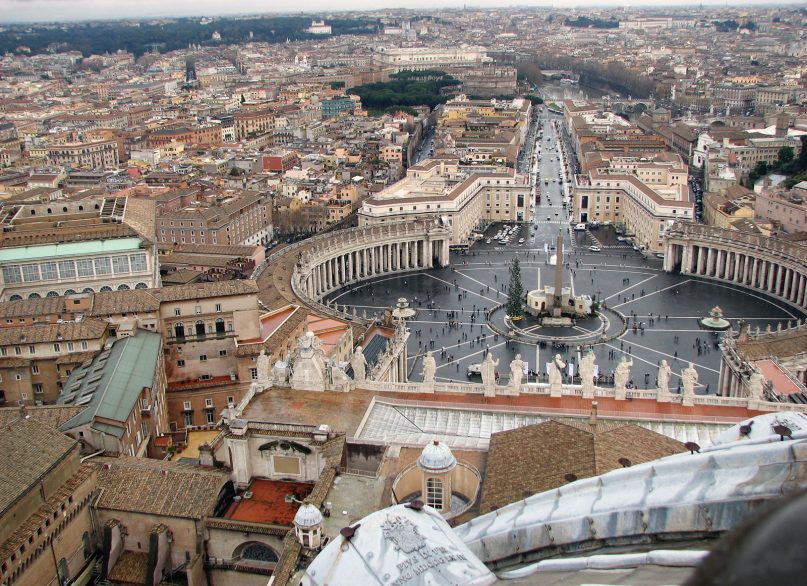
Across time and in different situations, the church has said different things because the same gospel finds different expressions. But it is not so different when we reflect on how the gospel has been received by different cultures and informed by experience.
In no small way, the controversies that have plagued the church since Vatican II have concerned whether or not the church can express revelation differently. The return of the Mass to spoken, vernacular languages is only one example — the early church worshipped in Aramaic, Greek and eventually in Latin because those were the languages people spoke. Insisting on a Latin Mass after other languages emerged came later.
Controversies like those around abortion and marriage equality have really been about the church coming to terms with finding itself in a modern world where believers from many different religious traditions join nonbelievers under the authority of a civil state with no religious allegiances. Different circumstances demand different responses.
All of this has been rather difficult for a 2,000-year-old church, whose lengthy history is a benefit for how it suggests so many different ways to approach the world. Its age can cause trouble when we see our history only in the narrow light of the relatively recent past.
“Gaudium et Spes” offers much to help us. It tells us, “Respect and love ought to be extended also to those who think or act differently than we do in social, political and even religious matters,” and it insists that, “Praise is due to those national procedures which allow the largest possible number of citizens to participate in public affairs.” Both of those statements began to put the hope for a Catholic state under a Catholic monarch behind the church, a hope nurtured for so long that many Catholics still believe the church could not exist without them. That sort of resistance to Vatican II bedeviled Paul VI, John Paul II, Benedict XVI and Francis.
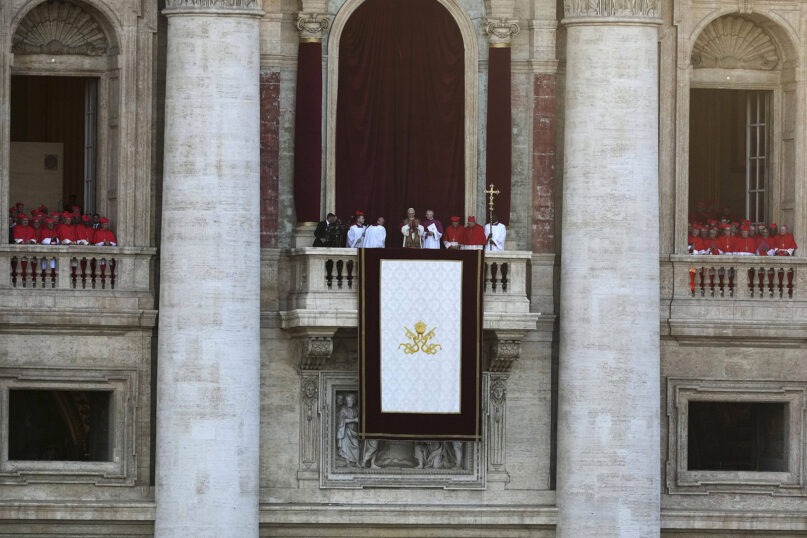
But Pope Leo XIV’s election seems to bring us to a different sort of moment. The consistent theme Leo has expressed since his May 8 election has been unity. Of course every pope wants unity, and the documents of Vatican II refer to the pope as the “visible source and foundation of unity” for the church. “Gaudium et Spes” reminds us that every Catholic also is bound to be a “sign of unity,” which I think perhaps may characterize Pope Leo’s approach.
The determined opposition to Vatican II that took root so soon after the council metastasized across decades — to a point where opposition to the authority of Francis reflected open and unconcealed desires for division. But the opposition took subtler and more perniciously insidious forms, too. Sometimes it tried to minimize changes resulting from the council and claimed Vatican II has suffered from misinterpretation. Other times, more bold efforts were made to distort what the bishops did at Vatican II, again to minimize any sense of change that the council might have represented.
As Noonan reminds us, the church does not metamorphose to suit prevailing tastes. But the church can and must change, as it has many times, to proclaim its unchanging message effectively in different situations and in light of new experiences. It would be preposterous to believe that Pope John XXIII, who convened the council, intended no changes when he spoke at the council’s opening about bringing the church “up to date.” Those updates, proclaimed by the bishops of the world under and with the pope, are authoritative. There can be no division about them.
That is where we need to begin understanding how Pope Leo is calling Catholics to unity. It is not a call to find some middle ground between two opposed positions. I think Leo has a firmer intention in calling all Catholics to accept and embrace what the church taught in Vatican II — that unity has content and demands a mature faith. The pope described this in his first papal homily that drew from “Gaudium et Spes,” when he said even God has been revealed in different ways to humanity at different times. We hardly can be surprised when the church presents itself differently, too.
Sixty years since Vatican II’s end marks 60 years of division. Leo seems to say that time now is passed. Not scolding, he encourages us to work through “tensions,” “misunderstandings,” “difficulties” and “trials.” Yet, beneath the encouragement is firmness — “The (Vatican II) documents set out the norms for carrying out your service in the best possible way.”
Called to unity, with joy and hope, the church is moving forward into this mature phase of Vatican II under Pope Leo XIV.
(Steven P. Millies is the author of “Joseph Bernardin: Seeking Common Ground” and “A Consistent Ethic of Life: Navigating Catholic Engagement With U.S. Politics.” The views expressed in this commentary do not necessarily reflect those of Religion News Service.)
Original Source: