Religions Around The World

In the early morning hours, monks can be seen walking on their alms round in Kanchanaburi, Thailand
Showing humility and detachment from worldly goods, the monk walks slowly and only stops if he is called. Standing quietly, with his bowl open, the local Buddhists give him rice, or flowers, or an envelope containing money.  In return, the monks bless the local Buddhists and wish them a long and fruitful life.
Christians Celebrate Good Friday
Enacting the crucifixion of Jesus Christ in St. Mary's Church in Secunderabad, India. Only 2.3% of India's population is Christian. 
Ancient interior mosaic in the Church of the Holy Saviour in Chora
The Church of the Holy Saviour in Istanbul, Turkey is a medieval Byzantine Greek Orthodox church.
Dome of the Rock located in the Old City of Jerusalem
The site's great significance for Muslims derives from traditions connecting it to the creation of the world and to the belief that the Prophet Muhammad's Night Journey to heaven started from the rock at the center of the structure.
Holi Festival in Mathura, India
Holi is a Hindu festival that marks the end of winter. Also known as the “festival of colors”,  Holi is primarily observed in South Asia but has spread across the world in celebration of love and the changing of the seasons.
Jewish father and daughter pray at the Wailing Wall in Jerusalem, Israel.
Known in Hebrew as the Western Wall, it is one of the holiest sites in the world. The description, "place of weeping", originated from the Jewish practice of mourning the destruction of the Temple and praying for its rebuilding at the site of the Western Wall.
People praying in Mengjia Longshan Temple in Taipei, Taiwan
The temple is dedicated to both Taoism and Buddhism.
People praying in the Grand Mosque in Ulu Cami
This is the most important mosque in Bursa, Turkey and a landmark of early Ottoman architecture built in 1399.
Savior Transfiguration Cathedral of the Savior Monastery of St. Euthymius
Located in Suzdal, Russia, this is a church rite of sanctification of apples and grapes in honor of the Feast of the Transfiguration of the Lord.
Fushimi Inari Shrine is located in Kyoto, Japan
It is famous for its thousands of vermilion torii gates, which straddle a network of trails behind its main buildings. Fushimi Inari is the most important Shinto shrine dedicated to Inari, the Shinto god of rice.
Ladles at the purification fountain in the Hakone Shrine
Located in Hakone, Japan, this shrine is a Japanese Shinto shrine.  At the purification fountain, ritual washings are performed by individuals when they visit a shrine. This ritual symbolizes the inner purity necessary for a truly human and spiritual life.
Hanging Gardens of Haifa are garden terraces around the Shrine of the Báb on Mount Carmel in Haifa, Israel
They are one of the most visited tourist attractions in Israel. The Shrine of the Báb is where the remains of the Báb, founder of the Bábí Faith and forerunner of Bahá'u'lláh in the Bahá'í Faith, have been buried; it is considered to be the second holiest place on Earth for Bahá'ís.
Pilgrims praying at the Pool of the Nectar of Immortality and Golden Temple
Located in Amritsar, India, the Golden Temple is one of the most revered spiritual sites of Sikhism. It is a place of worship for men and women from all walks of life and all religions to worship God equally. Over 100,000 people visit the shrine daily.
Entrance gateway of Sik Sik Yuen Wong Tai Sin Temple Kowloon
Located in Hong Kong, China, the temple is dedicated to Wong Tai Sin, or the Great Immortal Wong. The Taoist temple is famed for the many prayers answered: "What you request is what you get" via a practice called kau cim.
Christian women worship at a church in Bois Neus, Haiti.
Haiti's population is 94.8 percent Christian, primarily Catholic. This makes them one of the most heavily Christian countries in the world.

Michigan’s fifth diocesan abuse report details dozens of allegations against priests

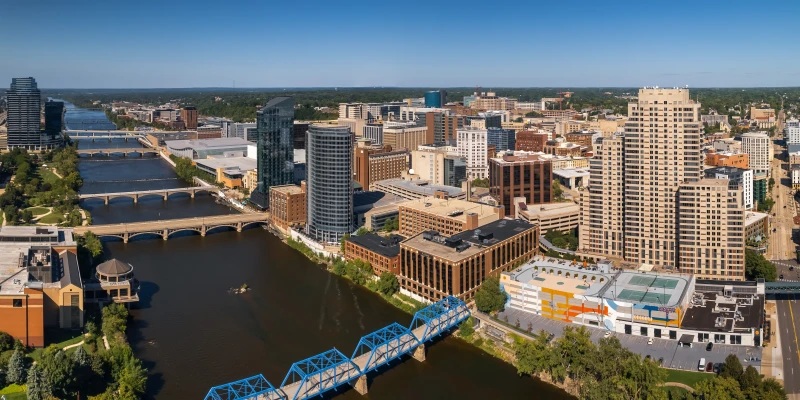
The Michigan government released another report on diocesan abuse in December 2025, detailing dozens of allegations against more than 50 priests in the Diocese of Grand Rapids. / Credit: Snehit Photo/Shutterstock

CNA Staff, Dec 16, 2025 / 12:15 pm (CNA).

The Michigan government this week released its fifth report on diocesan abuse in the state, detailing dozens of allegations against more than 50 priests in the Diocese of Grand Rapids. 

The report from the attorney general’s office, released on Dec. 15, comes after four other reports detailing abuse allegations in the dioceses of Lansing, Kalamazoo, Gaylord, and Marquette.  

As with the other reports, the allegations detailed in the Grand Rapids investigation go back decades. The Dec. 15 report encompasses abuse allegations against “priests or deacons who are current or former clergy for the Diocese of Grand Rapids, that occurred in the diocese from Jan. 1, 1950, to the present,” the review says. 

The alleged abuse reports were pulled from a variety of sources, including a government tip line, police investigations, and abuse reports disclosed by the diocese itself. 

The majority of the priests identified in the report — 37 out of 51 — are “known or presumed to be dead,” the report says, while none of the remaining 14 are in active ministry in the Grand Rapids Diocese. 

Nearly all of the potential criminal violations in the report occurred “before 2002,” it says. 

Most of the alleged abuse was reported to have occurred against “either boys or girls under the age of 16,” though the state said some alleged abuse occurred against adults. 

In a video message after the release of the report, Grand Rapids Bishop David Walkowiak offered his “deepest and most sincere apologies” to the victims of clergy abuse there. 

The prelate commended “the courage that victim-survivors have to tell their stories,” calling it a “testament to their strength and resilience.” 

“Priests are ordained to serve in the person of Christ himself, which makes the sexual abuse of minors incomprehensible and particularly harmful,” he acknowledged.

The bishop said the report partly inflates the number of victims by detailing “consensual relationships between priests and adults,” which he pointed out are “immoral [but] not in violation of Michigan law.”

Walkowiak said the diocese has “cooperated fully” with the attorney general’s office during the investigation. He noted that the diocese has implemented “numerous safeguards” to protect children — including zero-tolerance protocols — and has “diligently upheld these practices for more than 20 years.” 

State Attorney General Dana Nessel, meanwhile, said in a press statement on Dec. 15 that abuse survivors “deserve to be heard.”

“[B]y releasing these reports, we hope to honor the courage of victims and ensure their experiences are no longer hidden,” she said. 

Reports on the Archdiocese of Detroit and the Diocese of Saginaw are still forthcoming from the state and are expected to be released at a later date. 

Original Source:

https://www.catholicnewsagency.com/news/268509/michigan-abuse-report-details-dozens-of-allegations-against-priests