Religions Around The World

In the early morning hours, monks can be seen walking on their alms round in Kanchanaburi, Thailand
Showing humility and detachment from worldly goods, the monk walks slowly and only stops if he is called. Standing quietly, with his bowl open, the local Buddhists give him rice, or flowers, or an envelope containing money.  In return, the monks bless the local Buddhists and wish them a long and fruitful life.
Christians Celebrate Good Friday
Enacting the crucifixion of Jesus Christ in St. Mary's Church in Secunderabad, India. Only 2.3% of India's population is Christian. 
Ancient interior mosaic in the Church of the Holy Saviour in Chora
The Church of the Holy Saviour in Istanbul, Turkey is a medieval Byzantine Greek Orthodox church.
Dome of the Rock located in the Old City of Jerusalem
The site's great significance for Muslims derives from traditions connecting it to the creation of the world and to the belief that the Prophet Muhammad's Night Journey to heaven started from the rock at the center of the structure.
Holi Festival in Mathura, India
Holi is a Hindu festival that marks the end of winter. Also known as the “festival of colors”,  Holi is primarily observed in South Asia but has spread across the world in celebration of love and the changing of the seasons.
Jewish father and daughter pray at the Wailing Wall in Jerusalem, Israel.
Known in Hebrew as the Western Wall, it is one of the holiest sites in the world. The description, "place of weeping", originated from the Jewish practice of mourning the destruction of the Temple and praying for its rebuilding at the site of the Western Wall.
People praying in Mengjia Longshan Temple in Taipei, Taiwan
The temple is dedicated to both Taoism and Buddhism.
People praying in the Grand Mosque in Ulu Cami
This is the most important mosque in Bursa, Turkey and a landmark of early Ottoman architecture built in 1399.
Savior Transfiguration Cathedral of the Savior Monastery of St. Euthymius
Located in Suzdal, Russia, this is a church rite of sanctification of apples and grapes in honor of the Feast of the Transfiguration of the Lord.
Fushimi Inari Shrine is located in Kyoto, Japan
It is famous for its thousands of vermilion torii gates, which straddle a network of trails behind its main buildings. Fushimi Inari is the most important Shinto shrine dedicated to Inari, the Shinto god of rice.
Ladles at the purification fountain in the Hakone Shrine
Located in Hakone, Japan, this shrine is a Japanese Shinto shrine.  At the purification fountain, ritual washings are performed by individuals when they visit a shrine. This ritual symbolizes the inner purity necessary for a truly human and spiritual life.
Hanging Gardens of Haifa are garden terraces around the Shrine of the Báb on Mount Carmel in Haifa, Israel
They are one of the most visited tourist attractions in Israel. The Shrine of the Báb is where the remains of the Báb, founder of the Bábí Faith and forerunner of Bahá'u'lláh in the Bahá'í Faith, have been buried; it is considered to be the second holiest place on Earth for Bahá'ís.
Pilgrims praying at the Pool of the Nectar of Immortality and Golden Temple
Located in Amritsar, India, the Golden Temple is one of the most revered spiritual sites of Sikhism. It is a place of worship for men and women from all walks of life and all religions to worship God equally. Over 100,000 people visit the shrine daily.
Entrance gateway of Sik Sik Yuen Wong Tai Sin Temple Kowloon
Located in Hong Kong, China, the temple is dedicated to Wong Tai Sin, or the Great Immortal Wong. The Taoist temple is famed for the many prayers answered: "What you request is what you get" via a practice called kau cim.
Christian women worship at a church in Bois Neus, Haiti.
Haiti's population is 94.8 percent Christian, primarily Catholic. This makes them one of the most heavily Christian countries in the world.

St. Stephen: Visiting the spot where the first martyr died

Church of St. Stephen in Jerusalem, Israel, Sept. 18, 2018. / Credit: Bukvoed, CC BY 4.0, via Wikimedia Commons

CNA Staff, Dec 26, 2025 / 04:00 am (CNA).

If “Good King Wenceslas” is one of the Christmas hymns you look forward to each year, you probably know which saint is celebrated today — St. Stephen, the first person to die for the risen Christ. Roman Catholics celebrate his feast on Dec. 26, while Eastern Catholics honor him one day later, on Dec. 27. 

Stephen was a Jew who likely became a follower of Jesus while he was still ministering on earth. He may have been among the 70 disciples whom Christ sent out as missionaries, who preached the coming of God’s kingdom while traveling with almost no possessions.

Famously, Stephen was stoned to death near the Damascus Gate in Jerusalem for proclaiming his faith in Jesus. Today, near the site of Stephen’s martyrdom, a grand Catholic church and convent have stood since the year 1900. A chapel of one form or another memorializing Stephen’s martyrdom has existed at the site since at least the fifth century.

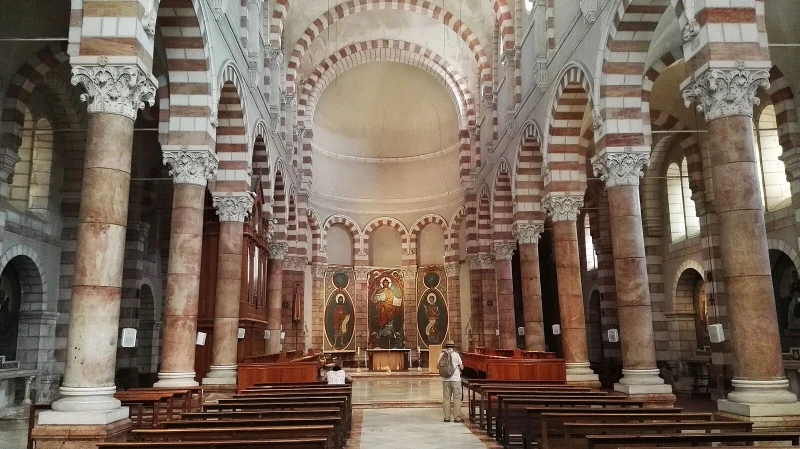
Every year, the Church of St. Stephen (Saint-Étienne in French), a minor basilica, celebrates its patron with a Mass and a meal. The current Dominican priory was created in 1882 and the Dominicans today run the École Biblique et Archéologique Française de Jérusalem, a highly respected center of biblical study.

St. Stephen’s Basilica within the French Biblical and Archaeological School of Jerusalem. Credit: Utilisateur:Djampa, CC BY-SA 4.0, via Wikimedia Commons

Who was Stephen?

In the Acts of the Apostles, Luke praises Stephen as “a man full of faith and the Holy Spirit” who “did great wonders and signs among the people” during the earliest days of the Church. He may have been among the 70 disciples whom Christ sent out as missionaries, who preached the coming of God’s kingdom while traveling with almost no possessions.

Stephen’s speech immediately before his martyrdom is the longest recorded in the Acts of the Apostles. In it, the saint describes Israel’s resistance to God’s grace in the past and accuses the present religious authorities of “opposing the Holy Spirit” and rejecting the Messiah.

Before he was put to death, Stephen had a vision of Christ in glory. “Look,” he told the Jewish court. “I see the heavens opened and the Son of Man standing at the right hand of God!” He was dragged away and stoned to death. 

Stephen’s martyrdom was overseen by a Pharisee named Saul — later St. Paul  — who became a disciple after a dramatic vision of Christ and became a martyr himself.

Numerous popes have reflected over the years on the importance of St. Stephen in the life of the Church.

This story was first published on Dec. 26, 2023, and has been updated.

Original Source:

https://www.catholicnewsagency.com/news/256337/st-stephen-visiting-the-spot-where-the-first-martyr-died