(RNS) — In a year marked by political violence and collective unease, writers on religion and spirituality offered reflections on faith where it is most contested — in national histories and in communities shaped by conflict and loss — and where it is most intimate: in marriages and families, in spiritual practices and in the body itself.
The books that RNS covered this year, along with several honorable mentions, reflect not only what people believed in 2025, but how those beliefs shaped lives, institutions, news and culture. Some of the titles challenged long-held assumptions or explored spirituality beyond congregational walls, including some broader cultural shifts that have made organized religion feel increasingly, as one author put it, “obsolete.” Together, they offered readers tools for understanding the history, power and costs involved in holding religious ideals.
At the same time, 2025’s standout religion and spirituality books did not abandon hope. Whether through theology emerging from Palestinian Christian communities or personal narratives of spiritual awakening, these works suggest that faith remains a source of creativity, resistance and renewal.
“Awake” by Jen Hatmaker
Jen Hatmaker married at 19, and for 26 years her life seemed an enviable evangelical Christian success story: along with hosting a home renovation TV show, she had a thriving career as an author and women’s ministry leader. She shared her home with a husband who was a pastor and their five kids. Then it all fell apart. Her memoir, “Awake,” starts with the devastating middle-of-the-night discovery of betrayal that ended her marriage before returning to the Bible college meet-cute where it began. She chronicles the ways purity culture, complementarianism and ministry zeal both choked and fueled her fledgling marriage. In the evangelical origins of that love story she finds the seeds of what she now calls “bad fruit.” “Awake” is a divorce memoir, but it is also an exvangelical testimony — whether or not she would claim that label for herself.
Read more about this book here. Listen to the full interview with Hatmaker on the “Saved by the City” episode, “The Risks of a Young Evangelical Marriage.”

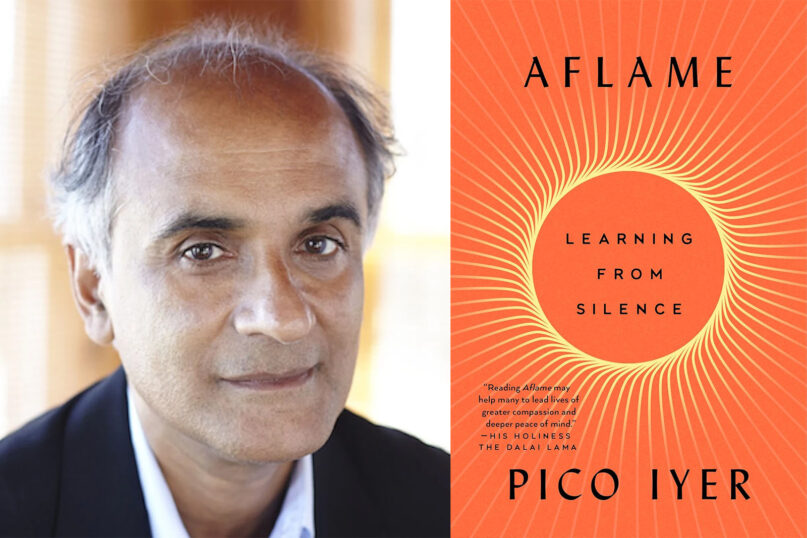
“Aflame: Learning From Silence” by Pico Iyer
In 1990, a wildfire burned down Pico Iyer’s family home in Southern California and everything inside. In his latest book, “Aflame: Learning From Silence,” the prolific novelist, travel writer and essayist tells how he found solace through more than 100 visits over three decades at the New Camaldoli Hermitage, a Benedictine monastery “surrounded by fire” on the state’s Big Sur coastline. Through the Catholic and Buddhist teachings of the monks, Iyer finds a “language of silence” that transcends doctrinal boundaries and a path to finding stillness amid constant tumult. Read more about this book.
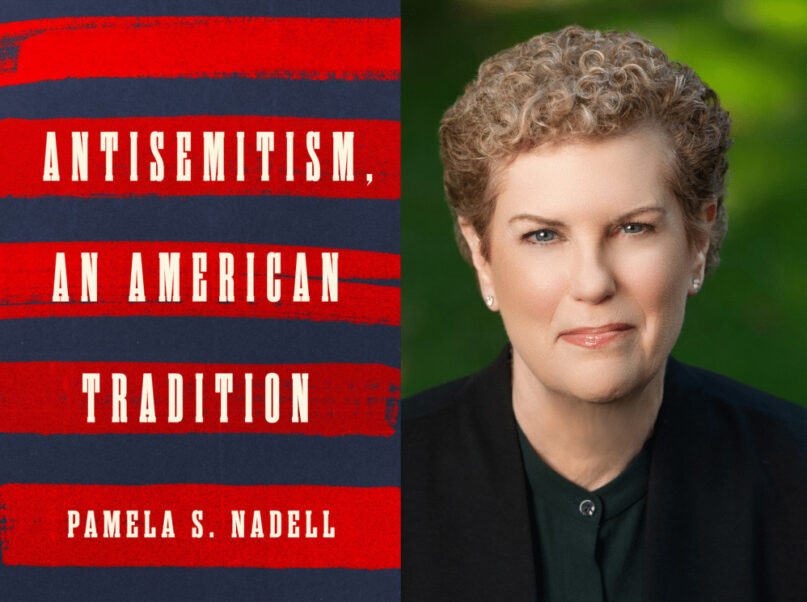
“Antisemitism, an American Tradition” by Pamela Nadell
Among the many books about antisemitism in America, this book’s very title — “An American Tradition” — forces readers to face the unbearable truth that antisemitism is not an imported toxin, but a native growth, woven into the national DNA. Historian Pamela Nadell offers a chilling and necessary corrective to the idea that antisemitism is confined to murmured slurs or private prejudice. American antisemitism is public, performative, often lethal. The book ends with a sentence that refuses to let us look away: “To be an American Jew meant to live with the memory of Jew hate in the past, the possibility that it might erupt anywhere and at any time in the present, and the knowledge that it would likely persist into the future.”
Read more about this book and listen to an interview with Nadell on the “Martini Judaism” podcast here.
“Joseph Smith: The Rise and Fall of an American Prophet” by John G. Turner
The author of a biography of Brigham Young, John G. Turner examines another complicated Latter-day Saint leader in founding prophet Joseph Smith Jr., combing through mountains of evidence to ask, Was Smith a true prophet? Did he really practice plural marriage? “I think the evidence for Joseph’s polygamous sealings is pretty overwhelming,” Turner told RNS. Read more about this book.

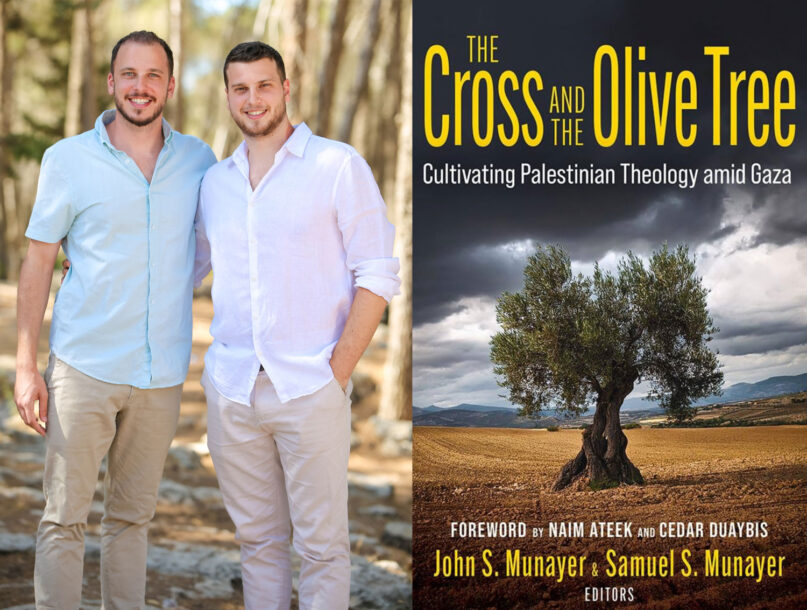
“The Cross and the Olive Tree: Cultivating Palestinian Theology amid Gaza” edited by John Munayer and Samuel Munayer
Palestinian Christians living in Israel and the West Bank may not have suffered the calamities inflicted on Gaza these past two years, but they, too, have been traumatized by the punishing war. This collection of essays by young Palestinian Christians in Israel and abroad reflects on how theology can offer hope in the midst of destruction. The theology offered by the collective of writers is not academic or specialized. Instead, the book offers meditations on lived theology. The writers argue that liberation theology can be a tool for survival, resistance and collective action. Read more about this book.
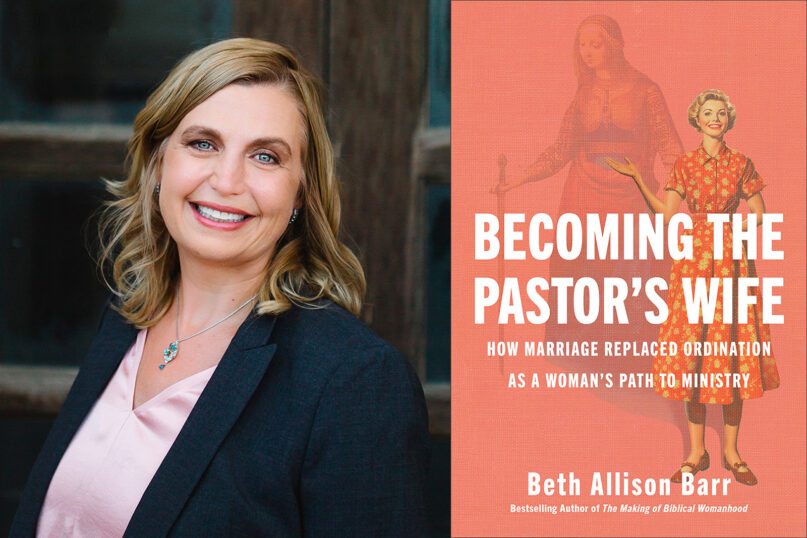
“Becoming the Pastor’s Wife: How Marriage Replaced Ordination as a Woman’s Path to Ministry” by Beth Allison Barr
Imagine a profession that requires your spouse to answer intrusive questions about their fertility, personal religious beliefs and their own career trajectory — and that’s just the job interview. Such interrogations are common for many pastors’ wives across white evangelical Christianity, according to medieval historian Beth Allison Barr — herself a pastor’s wife and the James Vardaman Endowed Chair of History at Baylor University. As she describes in her new book, that’s only the start. Many women who marry pastors are under scrutiny for their appearance, homemaking skills, parenting and not least their part in leading the church, all of it unpaid labor. While Barr isn’t arguing for an end to the role, she wants everyone to know that the job’s expectations are based in culture more than Scripture. Read more about this book.
“Why Religion Went Obsolete: The Demise of Traditional Faith in America” by Christian Smith
Social scientist Christian Smith, a professor of sociology at the University of Notre Dame, gets the reader’s attention by describing traditional organized religion as “obsolete” in the U.S. But his book chronicles something bigger and more elusive. It’s about all the cultural changes that precipitated religious decline and made organized religion less relevant in people’s lives. Some may view the book as being down on religion, Smith told RNS, but that’s not the case. The sociologist’s nearly two-dozen previous books have chronicled the highs and lows of religion in America for many years, and Smith himself is a Christian. Read more about this book.

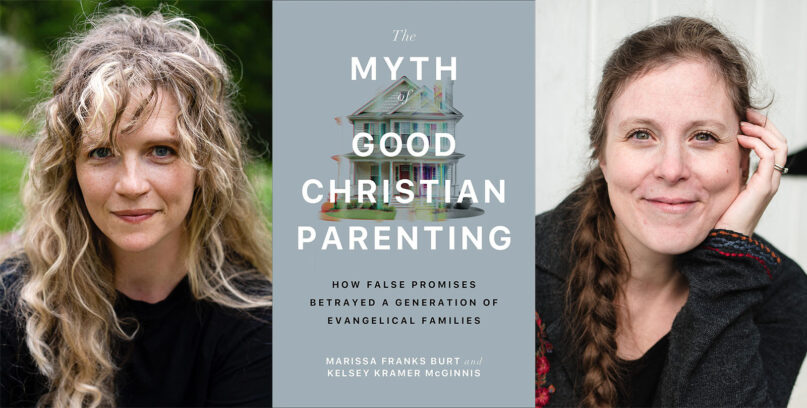
“The Myth of Good Christian Parenting: How False Promises Betrayed a Generation of Evangelical Families” by Marissa Franks Burt and Kelsey Kramer McGinnis
Christian authors Marissa Franks Burt and Kelsey Kramer McGinnis claim that in most evangelical Christian homes, corporal punishment is still the norm, despite widespread condemnation of the practice. Spanking is just one feature of what Burt and Kramer McGinnis call the “Christian Parenting Empire” — an interconnected movement of evangelical authors and ministry leaders who have marketed their rigid parenting methods by saying they are endorsed by God. The authors argue that spanking is neither a biblical nor an effective response to sin, and negatively impact families down the line. Read more about this book.
“Yogalands: In Search of Practice on the Mat and in the World” by Paul Bramadat
Is yoga Indic physiotherapy, a wellness routine, a spiritual practice or something else entirely? Canadian religion scholar Paul Bramadat dives into that question as he analyzes the complex, evolving world of modern postural yoga. Straddling the sacred and the secular, Bramadat, a longtime Ashtanga yoga practitioner, draws from his own experience and interviews with teachers and students across North America, finding a peculiar political theme in yoga, and challenges readers to consider both yoga’s ancient roots and its modern societal impact. Perhaps most compelling of all, he asks, “Why are 80% of yoga practitioners in North America white women?” Read more about this book.

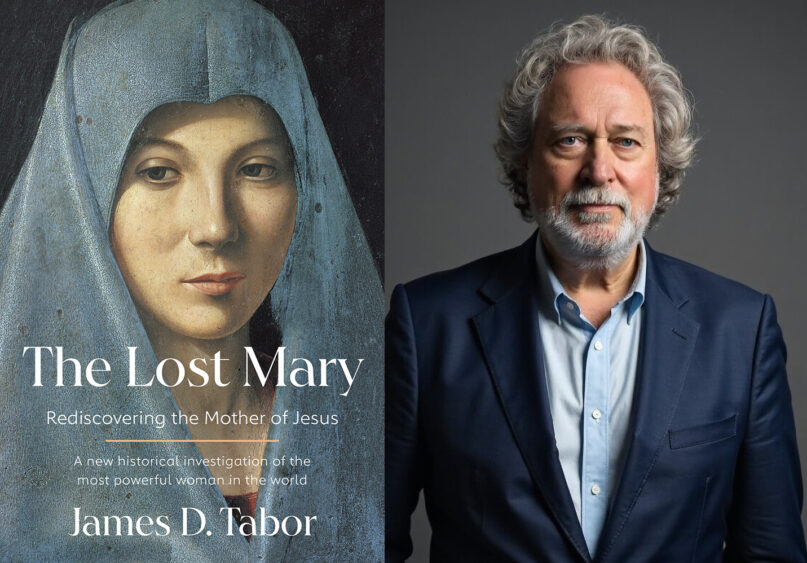
“The Lost Mary: Rediscovering the Mother of Jesus” by James D. Tabor
She’s the subject of the most-recited prayer in the world, but Mary might be one of the least-known women in history, argues Bible scholar James D. Tabor. Christians mostly think of Jesus’ mother on Christmas at the center of the Nativity story and on Easter, recalling her crying at the cross. In “The Lost Mary,” Tabor seeks to describe what happened in between those events and discover Mary’s real identity, which he argues has been lost in age-old attempts to paint her as an ever-virgin, quasi-divine woman. The result of 20 years of research, the book delves into Mary’s childhood in Galilee, her encounter with Jesus’ possible father and her arranged marriage with Joseph. The book also challenges the idea of Mary’s perpetual virginity, arguing instead that she raised eight children as a single mother after Joseph died. Read more about this book.
Honorable mentions:
“As a Jew: Reclaiming Our Story From Those Who Blame, Shame, and Try to Erase Us” by Sarah Hurwitz
“Is it God’s Will? Making Sense of Tragedy, Luck and Hope in a World Gone Wrong” by Brandon Ambrosino
“Doing Small Things With Great Love: How Everyday Humanitarians Are Changing the World” by Sharon Eubank
“Holy Disruptor: Shattering the Shiny Facade by Getting Louder with the Truth” by Amy Duggar King
“The Bible Says So: What We Get Right (and Wrong) About Scripture’s Most Controversial Issues” by Dan McClellan
Original Source:
https://religionnews.com/2025/12/29/rns-top-10-religion-and-spirituality-books-of-2025/