VATICAN CITY (RNS) — The U.S. capture of Venezuelan President Nicolás Maduro and his wife on Saturday (Jan. 3) may have ended one crisis for the Holy See and opened another, testing the Vatican’s long-standing defense of national sovereignty in an increasingly volatile global order.
As cardinals from around the world gather in Rome for their first major meeting since electing Pope Leo XIV — a consistory meant to address pressing church matters — mounting geopolitical tensions are expected to feature prominently in formal and informal conversations. While the Vatican’s tensions with the Venezuelan government, which began under Pope Francis and continued in recent months under Leo, are seemingly halted after Maduro’s removal from office, now the Holy See must consider concern for Venezuelan Catholics and the U.S.’ escalating actions and impact beyond Venezuela in any response.
“What has happened has created a precedent that scares the hell out of those cardinals who are in other countries where they might be invaded by Russia or invaded by China,” said Massimo Faggioli, a Vatican commentator and professor in ecclesiology at Trinity College in Dublin.
President Donald Trump has already threatened military action in other countries, with Cuba laid out as a target. And the U.S.’ Venezuela operation could be seen as an example of how China could capture the island of Taiwan, which the Holy See has had formal diplomatic relations with since 1942, experts have warned.
“The American pope is trying to keep the church together, including the Catholic Church in the United States,” which came out in strong numbers to vote for Trump in 2024, Faggioli said. “This is 10 times more complicated — to have an American pope when America is in the hands of someone who simply doesn’t think that he is bound by the law.”
Pope Leo has criticized Trump’s policies in the past yet has been careful in how publicly and often he speaks. As the U.S.’ role on the global stage shifts, the question remains what Leo’s vision of an “unarmed and disarming peace” looks like in practice.

Since the arrest of Maduro and his wife, Leo has reacted both publicly and through back channels. In his Sunday address, Leo voiced “deep concern” over the situation. “The good of the beloved Venezuelan people must prevail over every other consideration,” he said in his address, with an appeal to end the violence and guarantee the country’s sovereignty. The next day, he met with his representative to the U.S., Cardinal Christophe Pierre.
Venezuela bishops urged faithful to reject all forms of violence and asked that “the decisions that are made always be taken for the well-being of our people,” in a post Saturday on Facebook.
“The two most important topics that both the pope and the bishops’ conference in Venezuela address are sovereignty and the condition of the people,” said journalist Victor Gaetan, author of “God’s Diplomats: Pope Francis, Vatican Diplomacy and America’s Armageddon.” He said sovereignty is a key issue for the Holy See, which has been historically dedicated to ensuring the integrity of its nonmilitary, tiny city-state. “The issue of sovereignty is a form of protection for the Vatican’s independence as well.”
In a post on X, U.S. Ambassador to the Holy See Brian Burch addressed the pope’s comments on Venezuela, seemingly interpreting them as a statement in support of Trump’s military operation. Meanwhile, Secretary of State Marco Rubio had a phone call with Pope Leo’s No. 2 official at the Vatican, Cardinal Pietro Parolin, to discuss “pressing challenges,” including the humanitarian situation in Venezuela, the U.S. State Department said on Tuesday.
The conversations between the Holy See, Venezuelan prelates and the White House highlight the delicate balance Leo may aim to maintain: raising concerns about what Vatican officials view as violations of international law while also supporting Venezuelans.
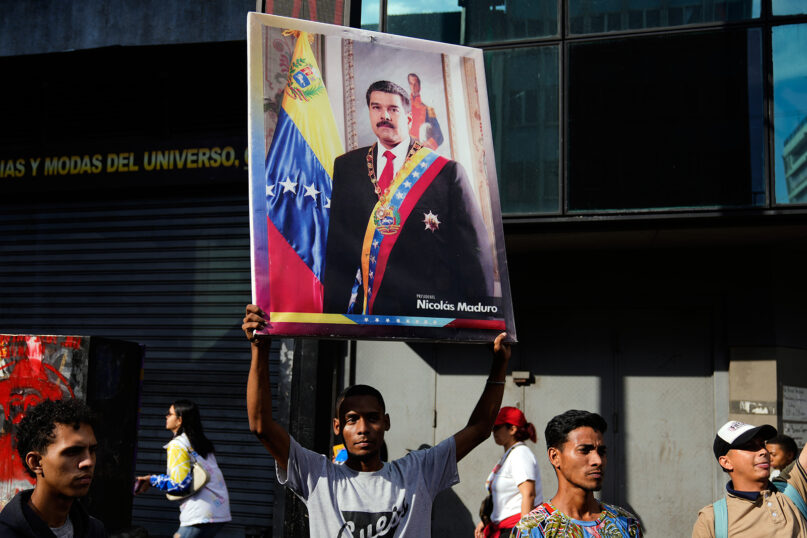
Some Vatican leaders also have storied histories with Venezuela. Parolin was papal envoy in Caracas between 2009 and 2013, when then-President Hugo Chávez’s administration was reportedly hostile toward the church and its representative. The No. 3 official at the Vatican, Cardinal Edgar Robinson Peña Parra, is Venezuelan, as is the superior general of the Jesuit order, the Rev. Arturo Sosa.
Soon after being elected president, Maduro traveled to the Vatican to meet with the newly elected Pope Francis, signaling his intention to ask for the Holy See’s mediation amid growing unrest in the country and tensions with the U.S. Francis, an Argentine, made numerous appeals for the respect of the rule of law and justice in Venezuela but was hesitant to side with Maduro’s opponents either, Faggioli said.
“Pope Francis was reluctant to make a case against a left-wing strongman in Latin America — like Cuba, like Venezuela — because of his anti-American instincts,” Faggioli said.
In 2016, the Holy See started to officially mediate dialogue between Maduro and the Venezuelan opposition coalition, after a surprise visit by the Venezuelan leader to the Vatican. But that dialogue quickly unraveled as Parolin penned a letter laying out requirements for dialogue that included respect for the constitution, the release of prisoners and setting a schedule for elections.
While returning from a trip to Egypt in 2017, Francis criticized Maduro for not complying with the conditions for dialogue and voiced concern for the situation repeatedly. Parolin was reported saying “the only solution for Venezuela is elections.”
But despite the Holy See’s challenges with Maduro, it stayed out of involving itself directly with the country’s leadership struggle. When opposition leader Juan Guaidó came to Rome to meet with Italian leaders in early 2018, Parolin refused to meet with the delegations, which reportedly only had a private meeting with Peña Parra. Returning from Panama in January 2019, Francis underscored that a pastor does not take sides.
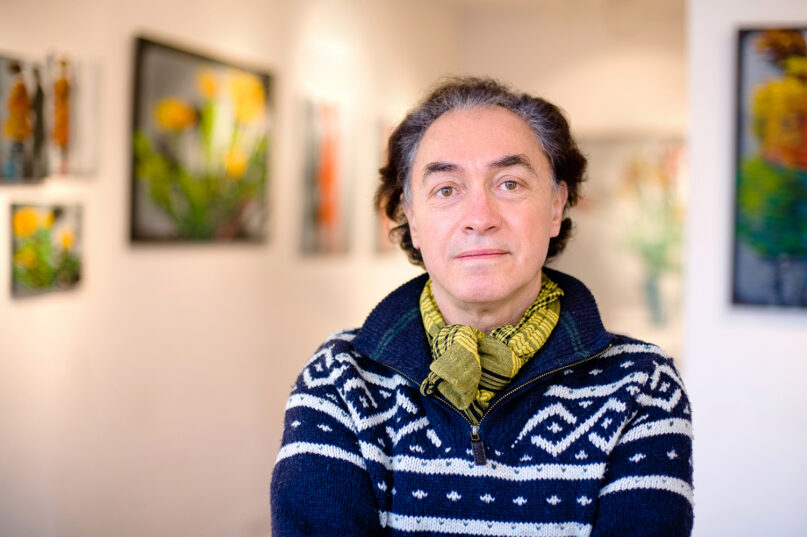
“The Vatican appears to be hyper-discreet during such moments of crisis,” Gaetan said.
Around the same time, a situation was unfolding in Nicaragua, where the Holy See was also trying to mediate amid massive anti-government protests. Nicaraguan President Daniel Ortega cracked down on local clergy who took an active role in calling out injustice. The country eventually broke diplomatic ties with the Holy See, expelled its nuncio, arrested prelates and closed seminaries.
Nicaragua served as a cautionary tale for the Vatican of the steep cost of stopping all dialogue with hostile leaders, Gaetan said. “This didn’t happen in Venezuela, this type of antagonism.”
In Venezuela, Francis continued on the path of dialogue, albeit in his own direct and candid papal style. The Italian newspaper Il Corriere della Sera leaked a February 2019 letter sent by Francis to Maduro, in which the pope said that despite his request for Vatican mediation, Maduro had failed to comply with basic demands for justice. Francis wrote that the Holy See didn’t support dialogue for dialogue’s sake, but only “the dialogue that takes place when all conflicting parties put the common good above any other interest and work for unity and peace.”
Maduro was reelected that same year in elections that the international community deemed unfair and not free, launching Venezuela into another political crisis; Maduro’s opposition was backed by the U.S. Under Francis, the Holy See didn’t back Maduro and his allies in China, Turkey and Iran, but kept its distance from the U.S. and Europe, which supported Guaidó to serve as interim president.
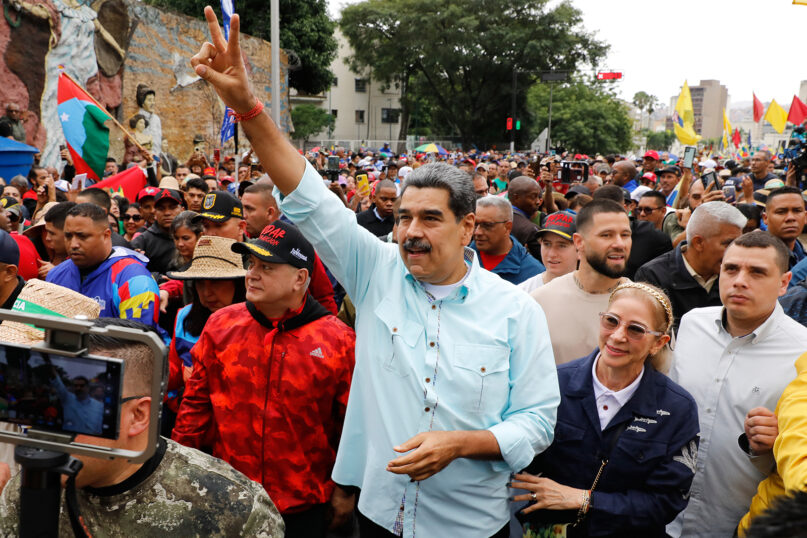
But the Holy See and the Venezuelan bishop continued to oppose Maduro’s leadership. In a letter sent to the Venezuelan Federation of the Chambers of Commerce, Parolin made an appeal for a “more just, democratic, productive Venezuela, committed to enterprise, in which genuine social justice prevails.” Maduro described Parolin’s words as a “compendium of hate, poison, quarrels and cynicism.”
By the time Maduro was reelected in 2024, the Holy See had shifted its approach, appointing a new papal representative and making other important bishop appointments in the country. But when Francis died in April 2025, the Venezuela situation was put on hold as its political struggle was reaching its climax.
In October, Leo inherited from Francis an event tied to the Holy See’s operations in Venezuela: the canonizations of José Gregorio Hernández and Carmen Rendiles, who would become the first Venezuelan saints. But instead of the canonizations’ fostering better relations, tensions continued between the church and the Venezuelan state.
Leo was asked about the worsening situation in Venezuela in early December as he returned from his apostolic visit to Turkey and Lebanon. “It seems that there is a possibility of some activity, even an operation to invade Venezuelan territory,” the pope said, responding to Trump’s increasing threats of military intervention. Leo suggested “another way” to address the conflict, suggesting U.S. “economic pressure.”
After the pope’s remarks, the Venezuelan government confiscated the passport of Cardinal Baltazar Porras, the emeritus archbishop of Caracas and a pivotal figure in denouncing the Maduro government. Porras had written a letter the previous year calling for “civic disobedience and resistance” against the regime, and during the canonizations of the Venezuelan saints in Rome, he described the situation as “morally unacceptable.”
With his passport taken, Baltazar will likely not be able to attend the consistory at the Vatican. But as cardinals prepare to gather behind closed doors, Venezuela could be a test case for Vatican diplomacy.
Original Source: