(RNS) — For many Muslims in the Twin Cities, Ramadan feels somber after the federal immigration enforcement surge left many immigrant families wary of gathering.
But those who spoke with RNS are hoping the Islamic sacred month of fasting and charity, which began this week, will offer a sense of communal grounding and healing.
Imam Abdisalam Adam, a leader at Dar Al-Hijrah Mosque in Minneapolis and an elementary school principal, said people are still cautious about gathering in large numbers at mosques because of the “unpredictability” of Immigration and Customs Enforcement action. He expects fewer people will attend nightly prayers at his Cedar-Riverside neighborhood mosque but said those who can participate in the month’s communal activities are seeking to process what’s happened in the state with others, leaning into spiritual practices for strength.
“The lessons of Ramadan are most relevant this year because of the fear and despair,” Adam said. “So definitely, people are tapping into their faith for grounding.”
Many mosques will hold free, near daily iftars, or fast-breaking evening meals, for their members throughout Ramadan, which will end March 19 or 20. Interfaith leaders across the Twin Cities are also organizing dinners rooted in solidarity with Somali Americans — a prominent target of President Donald Trump’s mass deportation agenda in Minneapolis— and the Muslim community.
Leading up to Ramadan, community members felt anxious about safety and “what it means to be Muslim in a time like this,” said Sarah Chebli, who organizes events with the Muslim American Society of Minnesota.
Chebli put together a series of events across MAS Minnesota’s seven mosques with a theme of holding firm to faith in the face of hate. The events also encouraged worshippers to support their immigrant community members.
“Ramadan is the month of ibadah (worship) … and also a part of worship is activism,” Chebli said. “It’s important that we keep showing up, that we don’t go back into our caves and forget everything that is happening, but contend with the moment that we’re living in.”
Amina Adan, a Somali American community organizer, said supporting people who are spending Ramadan alone is at the forefront of many people’s minds this month. She said some people in her community are hosting fewer iftar dinners and visits in their homes to create “less traffic and less possibility of anybody getting abducted.”
“There’s a little bit of sadness there,” she said. “But we are finding different ways of trying to give back and connect with others (by) accommodating kids and trying to create activities, and making sure that neighbors and family members that we know that are not able to go to work are getting fed.”
Meanwhile, close to 20 mosques are hosting interfaith dinners known as Taking Heart iftars, in partnership with the Minnesota Council of Churches and MAS Minnesota. For the past two decades, the dinners have mostly focused on educating people on the basics of the Muslim faith through presentations and genuine conversations over food.
The dinners this Ramadan, however, are taking on a different tone by calling on Christian communities to stand with Muslims as neighbors, said Suzanne Kelly, CEO of the Minnesota Council of Churches.
“Our Somali brothers and sisters have been under attack both related to these big fraud investigations and also the ongoing ICE activity,” Kelly said. “This small opportunity to dialogue is a way to combat hate with love and rhetoric that speaks of belonging and that we are all God’s children.”
Adam said connections formed through the Taking Heart iftars and other interfaith gatherings over the years have strengthened interfaith solidarity with Muslim Americans during the past couple months in the state.
“It has significantly contributed to the level of trust and care that we have seen from Minnesotans,” he said. “If these relationships were not there, I don’t think we would have had this much of a response.”
For example, Chelbi said that at South Metro Islamic Center in Rosemount, volunteers have stood outside during Friday prayer to watch for immigration agents and support worshippers inside. She said the iftars will be a way to thank them and continue to build their relationship.
“It’s the conversations that Muslims and non-Muslims have at the table that really builds bridges,” she said. “People are not here to learn the rules (of) Islam. They’re here to learn who their neighbors are.”
And with the rare overlap of Lent and Ramadan, religious communities are also using their shared fasting experiences to connect. Jen Kilps, network executive at the Minnesota Multifaith Network, is co-organizing a fish fry iftar that honors Ramadan, Lent and the Bahá’í month of fasting on Friday (Feb. 20). Held at Rabata Cultural Center, a Muslim women’s spiritual educational organization in Arden Hills, the interfaith dinner will feature conversations on building spiritual strength to do the work of healing and resistance.
“We have people working with the Legislature, we have people who are out protesting, we have people out leading vigils and mutual aid groups,” Kilps said. “Our spiritual disciplines and practices can be acts of resistance as well.”
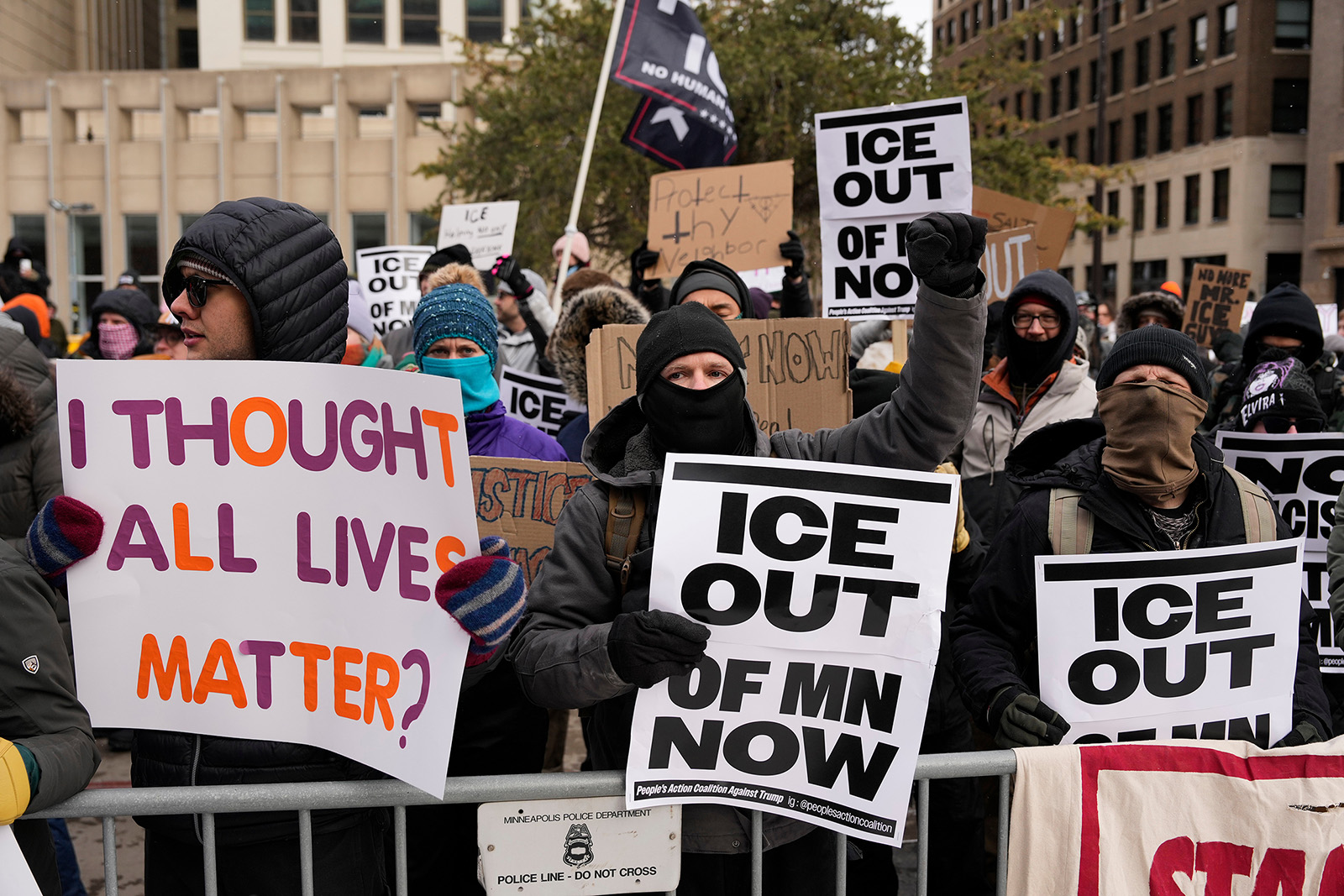
Tom Homan, the Trump administration border czar, said earlier this month that 700 federal immigration officers would leave Minnesota immediately, and more than 2,000 would stay in the state.
But community leaders said the fear and disruption will not go away easily, even if all the agents leave. It will take work and time for immigrants to recover, Kelly said.
“As we look ahead, we have to think about healing, repair, reconciliation, and so events like Taking Heart help begin that process,” Kelly said. “It will take months, maybe even years, but these small steps, I think, send a message that we are resilient and that we are determined to undo the damage that’s been done.”
Original Source: