NAIROBI, Kenya (RNS) — A Lutheran pastor inspired in her youth by a Catholic priest and nuns is set to become the first female presiding bishop of the Kenya Evangelical Lutheran Church.
The Rev. Catherine Ngina Musau, a 55-year-old mother of two adult children, was elected on Nov. 28 at the church’s general assembly in Malindi and will be installed in June. “This was by the grace of God because it came at the time God needed me to serve his church in this capacity,” Musau told Religion News Service.
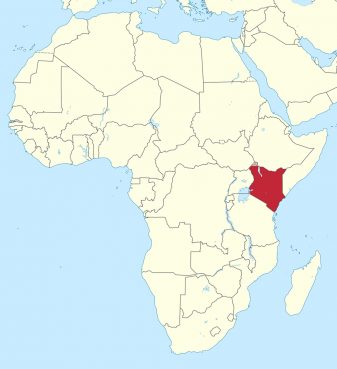
The bishop-elect will lead the 50,000-member Kenya Evangelical Lutheran Church, a Bible-based Protestant denomination with missions in eastern and southern Kenya, where it has a strong following among the Masai ethnic community, near the Tanzania border. It’s known for its relief work, especially flood, hunger and poverty response, care of orphans, HIV and AIDS interventions and the fight for gender justice.
The first female pastor in the Kenya Evangelical Lutheran Church when she was ordained in 2003, Masau become one of the few women bishops in the country, where deep patriarchal church structures and local culture pose a challenge to women who aim for senior positions.
“Women priests who ascend to be leaders in the church and to the office of the bishops face significant challenges, but their presence in these offices is a sign of progress,” she said. “The journey towards full equality remains ongoing.”
Musau, who holds a master’s degree in Christian-Muslim relations from St. Paul’s University in Limuru, has headed the Kilifi Deanery in Kenya for the past two years.
Her journey to priesthood started in Machakos County, in eastern Kenya, where she was born in 1971, as the fourth child in a Christian family of 10. “Being raised in a very committed Christian family, I was privileged to start serving my Lord at an early age of my life. I served as Sunday school teacher in my parish by then after my confirmation class until I joined theological school,” she said.
At Mulala Mixed Secondary School, a Catholic mission school, she said she accepted Jesus as her savior in her second year. “My principal was the priest in charge of the mission and several teachers, being nuns, modeled and mentored me to join the ministry of serving God,” said Musau.
The Kenyan Lutheran Church owes its origin to the work of German and Swedish Lutheran missionaries who arrived in Africa before the First World War, initially arriving in Tanganyika, today part of Tanzania. Until its inauguration in 1992, it operated as a synod of the Evangelical Lutheran Church in Tanzania. In 1965, members of the denomination working in Kenya had requested the establishment of Lutheran services in Nairobi and Mombasa, and a synod was registered in 1968. It was permitted to register as an independent entity in 1989, paving the way for the inauguration of the church.
Divided into four districts, the church operates in 25 of the 47 Kenyan counties and has 50 parishes. It also has strong partnerships with the Evangelical Lutheran Church in America, as well as Lutheran churches in Germany.
“My areas of priority will be on mission, evangelism and discipleship, spiritual formation and leadership integrity for all leaders, ordained and lay and diakonia — compassion, holistic care and service — faith in action,” said Musau.
She also plans to focus on financial stewardship (transparency and accountability) to help the denomination achieve self-sustainability, among other areas. The church risks losing trust and confidence among people and lists the reasons, among others: power abuse, financial mismanagement, disunity among the congregants and politics.
As for expanding women’s leadership in the church, Musau said that Scripture is often interpreted selectively to justify subordination of women. “There is a need to reflect on the Biblical narratives, which highlight the role of women in leadership and spiritual calling, for example, Deacon Phoebe, Deborah, among (other women leaders named) in the Bible,” she said.
At the same time, younger women in the church need to be mentored in the complexities of leadership so they can gain the confidence to challenge cultural norms that block their rise in leadership. “Men leaders should be encouraged to use their public platforms to affirm the gifts of women leaders and share their experiences with women leadership,” she said.
Original Source: