(RNS) — City Council members in a Tulsa, Oklahoma, suburb denied a rezoning request for a proposed mosque after weeks of public debate that involved anti-Muslim pushback and a state attorney general’s investigation.
The denial came despite a recommendation from city staff and the Broken Arrow Planning Commission to approve the rezoning and issue a permit for a mosque and retail center in the city about 15 miles southeast of Tulsa, setting up what could become a legal fight.
Over 1,000 people packed a nearly four-hour-long special Broken Arrow City Council meeting on Monday (Jan. 12), which ended with a council vote of 4-1 to stymie the project.
Some speaking in opposition to the project claimed the proposed mosque would harbor terrorists, violate noise ordinances by broadcasting calls to worship, lower property values and contribute to the “incursion of Islam” in the country. Others raised concerns about land issues, such as water flow and traffic.
Nearby business owners also said they feared that congestion would decrease customer access. Another point of tension was an endowment organization that holds the land title.
Broken Arrow council member Justin Green, who noted he is the only Black member of the council, said before voting against the rezoning that his decision was grounded in zoning laws and not “based on racism or any of these Islamophobic terms or whatever.”
The mosque would have been the first formal place of worship for a growing number of Muslims in Broken Arrow. The Islamic Society of Tulsa purchased the 15-acre parcel of farmland in 2014 and spent years raising funds to begin construction, according to mosque leaders. IST is facing overcrowding issues, and leaders said it needed a second mosque in the area.
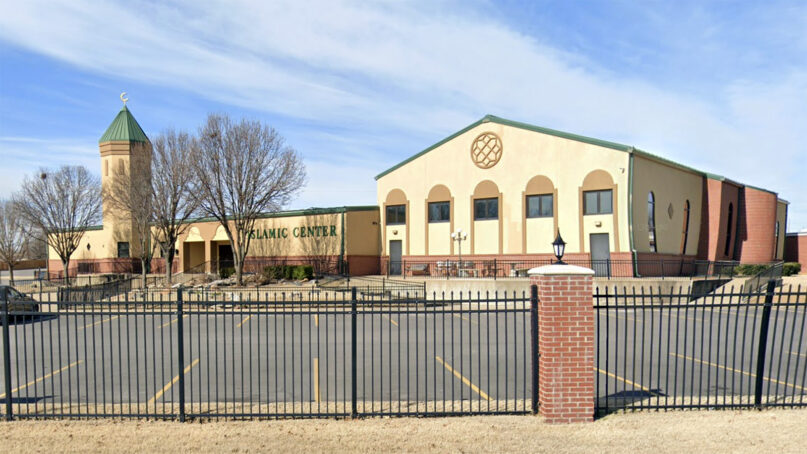
The mosque’s proposed phased construction included a two-story, 42,000-square-foot center and a 20,000-square-foot retail center to generate revenue. The site is currently zoned for agriculture, but IST requested rezoning it for commercial use.
However, Veronica Laizure, executive director of the Council on American-Islamic Relations-Oklahoma, said in a statement that Islamophobia dominated the public debate about the mosque “and potentially affected the city council’s decision to deny the rezoning.” Laizure also said actors outside of Oklahoma and inflammatory social media posts contributed to pushback by conservative groups that mobilized in opposition.
After a vitriolic public comment section that lasted hours, the city Planning Commission on Dec. 18 voted to recommend that the City Council approve rezoning and issue a conditional use permit for the project. At that meeting, Broken Arrow resident Cheri Thomas was one of several people who claimed Islam is incompatible with the U.S. Constitution. “It’s the job of our government to protect our culture, legal interests and citizen rights and freedoms, not pander to those who are hostile to our Constitution,” Thomas.
And on Thursday, Oklahoma Attorney General Gentner Drummond launched an investigation into the project, citing public concern about the mosque’s funding sources and public safety.
“Given the realities of global terrorism, there can be no compromise on public safety and security,” he said in a news release.
Laizure told Religion News Service before the vote that CAIR-Oklahoma would consider legal action if City Council members let anti-Muslim rhetoric carry the decision, calling the attorney general’s investigation a “witch hunt” and alleging that Drummond, who is running as a Republican for Oklahoma governor, was trying to agitate the voter base to raise money for his campaign.

In recent years, several proposed mosque expansions in other parts of Oklahoma have faced backlash. Imad Enchassi, an Oklahoma City University religion professor and senior imam at the Islamic Society of Greater Oklahoma City, said “unfounded fear” spreads quickly around proposed Islamic centers.
“It’s the same Islamophobia cycle that comes every once in a while,” Enchassi said. “I see a pattern in which people are being fed lies and misconceptions.”
Among those who spoke during the public comment section, several Muslim doctors, business owners and students asserted their constitutional right to worship and described their contributions to their neighbors in the Tulsa region. Others used their allotted three minutes to correct misconceptions about Muslims.
“I saw online that there are a lot of people attacking Muslims, saying we don’t care about our veterans. I want to put that to bed right now,” said Dr. Jamal Siddiqui, an ophthalmologist in Broken Arrow who said his ancestor fought in the Revolutionary War and who thanked veterans for their service.
Some voiced their opposition in Islamophobic terms. “I don’t want somebody trying to behead me when suddenly there’s an Islamic majority,” said Chris Walsh, who identified himself as president of AOM Ministries in Tulsa. “Islam doesn’t play well with others, and so I vehemently on record oppose the construction of a mosque in Broken Arrow, or anywhere in America for that matter.”
Aliye Shimi, CEO of the interfaith nonprofit Tulsa Metropolitan Ministry, which advocated for the mosque, said “ignorant, fear-based” pushback against the project was expected. “But luckily, there’s more love than there is hate,” Shimi said, referring to a coalition of faith leaders who stood in solidarity with the Broken Arrow Muslim community in recent weeks as the project was considered.
IST chairman Dr. Muhammad Afzal told RNS on Tuesday that the mosque is reviewing all options and “is committed to pursuing the project.” He said while it was disturbing to hear hateful comments from Broken Arrow residents, the Muslim community also received “a lot of support from our neighbors, our Christian friends and other communities all over the country.”
Original Source: