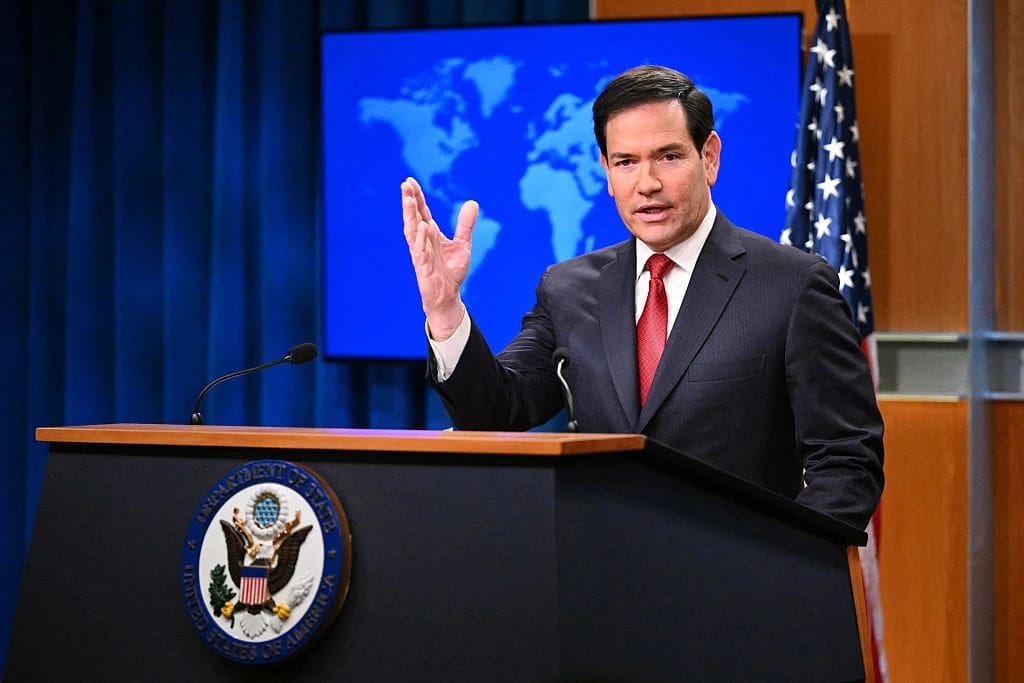
 U.S. Secretary of State Marco Rubio speaks during an end-of-year press conference in the State Department Press Briefing Room in Washington, D.C., on Dec. 19, 2025. | Credit: Mandel NGAN/AFP via Getty Images
Jan 15, 2026 / 15:57 pm (CNA).
Secretary of State Marco Rubio said the U.S. government is working with the Catholic Church to provide humanitarian aid to the people of Cuba after a late-October hurricane.
“The U.S. is sending the first humanitarian shipment to Cuba to help people in need as they continue to recover from Hurricane Melissa,” Rubio said in a Jan. 14 post on X. “We are working with the Catholic Church and partners to ensure aid reaches the Cuban people directly — not the illegitimate regime.”
The U.S. is sending the first humanitarian shipment to Cuba to help people in need as they continue to recover from Hurricane Melissa. We are working with the Catholic Church and partners to ensure aid reaches the Cuban people directly—not the illegitimate regime. The Trump…
— Secretary Marco Rubio (@SecRubio) January 14, 2026
U.S. Ambassador to the Vatican Brian Burch also reposted the message.
“The Trump administration stands with the Cuban people,” Rubio added.
Hurricane Melissa made landfall in Jamaica on Oct. 28, 2025. The storm’s high winds left a path of destruction and affected millions across the Caribbean, including Cuba, Haiti, and the Dominican Republic. Floodwaters and damaged water systems created conditions for disease outbreaks in Cuba, according to the U.N. Office for the Coordination of Humanitarian Affairs.
The State Department said Jan. 14 the Trump administration “is following through on our commitment to deliver $3 million in much-needed disaster relief to the Cuban people” with the first of a series of direct humanitarian aid shipments to Cuba.
The next aid shipment is set to be delivered from Miami on Jan. 16 and could reach an estimated 6,000 Cuban families in the “hardest-hit provinces of Santiago de Cuba, Holguin, Granma, and Guantanamo,” according to a State Department press release.
The statement said the State Department is “working closely” with the Catholic Church on delivering the assistance “without regime interference.”
Aid will take the form of food kits, including rice, beans, oil, and sugar; hygiene and water treatment kits; kitchen sets with pots and cooking utensils; and other household items such as sheets and blankets, solar lanterns, and more, the State Department said.
Catholic nongovernmental organizations in Cuba play a significant role in providing humanitarian aid on the island, with Caritas Cuba functioning as “the largest independent nongovernmental organization on the island, with more than 40 staff and a network of some 12,000 volunteers,” according to Catholic Relief Services (CRS), which works in partnership with Caritas Cuba.
Caritas Cuba provides emergency response and humanitarian aid as well as programs for HIV and AIDS, elderly people, human development, and other educational programs, according to its website.
Working in tandem with Caritas, CRS Cuba has distributed more than $32 million in medical emergency supplies for hospitals, elderly homes, and victims of natural disasters since 1993. CRS provides emergency shelter support, food assistance, clean drinking water, home repair, and assistance to farmers and small businesses recovering from natural disasters.
Original Source: