Religions Around The World

In the early morning hours, monks can be seen walking on their alms round in Kanchanaburi, Thailand
Showing humility and detachment from worldly goods, the monk walks slowly and only stops if he is called. Standing quietly, with his bowl open, the local Buddhists give him rice, or flowers, or an envelope containing money.  In return, the monks bless the local Buddhists and wish them a long and fruitful life.
Christians Celebrate Good Friday
Enacting the crucifixion of Jesus Christ in St. Mary's Church in Secunderabad, India. Only 2.3% of India's population is Christian. 
Ancient interior mosaic in the Church of the Holy Saviour in Chora
The Church of the Holy Saviour in Istanbul, Turkey is a medieval Byzantine Greek Orthodox church.
Dome of the Rock located in the Old City of Jerusalem
The site's great significance for Muslims derives from traditions connecting it to the creation of the world and to the belief that the Prophet Muhammad's Night Journey to heaven started from the rock at the center of the structure.
Holi Festival in Mathura, India
Holi is a Hindu festival that marks the end of winter. Also known as the “festival of colors”,  Holi is primarily observed in South Asia but has spread across the world in celebration of love and the changing of the seasons.
Jewish father and daughter pray at the Wailing Wall in Jerusalem, Israel.
Known in Hebrew as the Western Wall, it is one of the holiest sites in the world. The description, "place of weeping", originated from the Jewish practice of mourning the destruction of the Temple and praying for its rebuilding at the site of the Western Wall.
People praying in Mengjia Longshan Temple in Taipei, Taiwan
The temple is dedicated to both Taoism and Buddhism.
People praying in the Grand Mosque in Ulu Cami
This is the most important mosque in Bursa, Turkey and a landmark of early Ottoman architecture built in 1399.
Savior Transfiguration Cathedral of the Savior Monastery of St. Euthymius
Located in Suzdal, Russia, this is a church rite of sanctification of apples and grapes in honor of the Feast of the Transfiguration of the Lord.
Fushimi Inari Shrine is located in Kyoto, Japan
It is famous for its thousands of vermilion torii gates, which straddle a network of trails behind its main buildings. Fushimi Inari is the most important Shinto shrine dedicated to Inari, the Shinto god of rice.
Ladles at the purification fountain in the Hakone Shrine
Located in Hakone, Japan, this shrine is a Japanese Shinto shrine.  At the purification fountain, ritual washings are performed by individuals when they visit a shrine. This ritual symbolizes the inner purity necessary for a truly human and spiritual life.
Hanging Gardens of Haifa are garden terraces around the Shrine of the Báb on Mount Carmel in Haifa, Israel
They are one of the most visited tourist attractions in Israel. The Shrine of the Báb is where the remains of the Báb, founder of the Bábí Faith and forerunner of Bahá'u'lláh in the Bahá'í Faith, have been buried; it is considered to be the second holiest place on Earth for Bahá'ís.
Pilgrims praying at the Pool of the Nectar of Immortality and Golden Temple
Located in Amritsar, India, the Golden Temple is one of the most revered spiritual sites of Sikhism. It is a place of worship for men and women from all walks of life and all religions to worship God equally. Over 100,000 people visit the shrine daily.
Entrance gateway of Sik Sik Yuen Wong Tai Sin Temple Kowloon
Located in Hong Kong, China, the temple is dedicated to Wong Tai Sin, or the Great Immortal Wong. The Taoist temple is famed for the many prayers answered: "What you request is what you get" via a practice called kau cim.
Christian women worship at a church in Bois Neus, Haiti.
Haiti's population is 94.8 percent Christian, primarily Catholic. This makes them one of the most heavily Christian countries in the world.

Khartoum Anglican cathedral comes to life, three years after war forced its closure

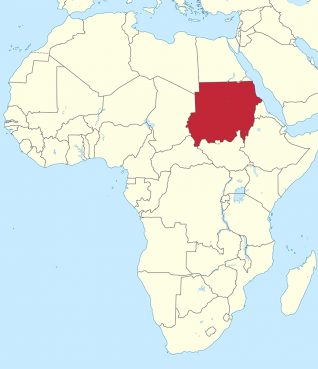
NAIROBI, Kenya (RNS) — After it was converted into a paramilitary base, its pews chopped into firewood by soldiers and its compound turned into a graveyard, All Saints Cathedral in Khartoum, the war-ravaged Sudanese capital, is rising again.

In October, the cathedral, the seat of the Church of Sudan, a member of the Anglican Communion, resumed activities, albeit with only a few people, according to Archbishop Ezekiel Kondo. “At present, it is a small congregation and people are returning. I am very pleased,” Kondo told Religion News Service.


Those congregants are believed to be some of the 1.2 million Sudanese people who have returned to Khartoum and other cities after troops aligned with Sudan’s government pushed out the rebel paramilitary Rapid Support Forces nearly a year ago. Driven by hope and resilience, the returning population is braving devastated infrastructure, lack of basic services and security risks.

Despite the government forces’ victory last March, the political leadership has only recently returned to the capital, which it abandoned in April 2023 amid intensified fighting, relocating to the Red Sea city of Port Sudan. “Today, we return. The government of hope returns to the national capital,” Prime Minister Kamil Idris told reporters in Khartoum in January.
The cathedral was among the five out of 33 Anglican churches in the country that were forced to shut down in the early phase of the civil war, and though All Saints was not bombed, it suffered severe damage, with the archbishop and the dean’s residences and offices completely destroyed. 

“So far there is no power. The security is not perfect, but there is a police station nearby,” the archbishop said of the cathedral, adding that the crosses that marked Christian graves in the cathedral’s cemetery have all been destroyed.

In an earlier interview, Kondo told RNS that it will cost the church millions of dollars to repair the damage. 

Fighting for control of the northeastern part of the country continues. No exact numbers are available, but local agencies and human right organizations estimate that the war and its related causes have killed between 20,000 and 150,000 people.

The International Rescue Committee estimates that an additional 12 million people have been displaced and 33.7 million people — approximately two-thirds of the country’s population — are in need of humanitarian assistance. “Sudan is the largest humanitarian crisis in the world. It is also the largest and the fastest displacement crisis,” said the organization.

At least 150 churches have been damaged or attacked in the country. In el-Fasher, the capital of the state of North Sudan, churches belonging to the Church of Sudan, the Africa Inland Church and the Roman Catholic Church came under attack during an 18-month siege that ended with an RSF victory last October.

Sudanese church leaders have been calling on “all parties to the conflict in Sudan to cease hostilities and agree to dialogue,” noting that the war has claimed countless innocent lives and forced large numbers of Sudanese men, women and children to flee their homes.

“We see and hear stories of women, children and the elderly and large numbers of communities displaced from their homes, their lives reduced to poverty and misery,” said Bishop Yunan Tombe Trille Kuku, the Catholic bishop of el-Obeid, in a Christmas statement. “At the same time, our leaders continue saying: We fight to the last person.”


Trille Kuku said this situation of despair should not be allowed to obscure the people’s future and that of the country.

Despite faith leaders’ persistent calls for peace and dialogue, several attempts at peace have failed, leaving a large area of the country insecure and inaccessible to humanitarian groups.

In November, President Donald Trump announced plans for the United States to work with other members of the Squad — the United Arab Emirates, Saudi Arabia and Egypt — along with partners to end the war in Sudan.

Original Source:

https://religionnews.com/2026/01/28/khartoum-anglican-cathedral-comes-to-life-three-years-after-war-forced-its-closure/