Religions Around The World

In the early morning hours, monks can be seen walking on their alms round in Kanchanaburi, Thailand
Showing humility and detachment from worldly goods, the monk walks slowly and only stops if he is called. Standing quietly, with his bowl open, the local Buddhists give him rice, or flowers, or an envelope containing money.  In return, the monks bless the local Buddhists and wish them a long and fruitful life.
Christians Celebrate Good Friday
Enacting the crucifixion of Jesus Christ in St. Mary's Church in Secunderabad, India. Only 2.3% of India's population is Christian. 
Ancient interior mosaic in the Church of the Holy Saviour in Chora
The Church of the Holy Saviour in Istanbul, Turkey is a medieval Byzantine Greek Orthodox church.
Dome of the Rock located in the Old City of Jerusalem
The site's great significance for Muslims derives from traditions connecting it to the creation of the world and to the belief that the Prophet Muhammad's Night Journey to heaven started from the rock at the center of the structure.
Holi Festival in Mathura, India
Holi is a Hindu festival that marks the end of winter. Also known as the “festival of colors”,  Holi is primarily observed in South Asia but has spread across the world in celebration of love and the changing of the seasons.
Jewish father and daughter pray at the Wailing Wall in Jerusalem, Israel.
Known in Hebrew as the Western Wall, it is one of the holiest sites in the world. The description, "place of weeping", originated from the Jewish practice of mourning the destruction of the Temple and praying for its rebuilding at the site of the Western Wall.
People praying in Mengjia Longshan Temple in Taipei, Taiwan
The temple is dedicated to both Taoism and Buddhism.
People praying in the Grand Mosque in Ulu Cami
This is the most important mosque in Bursa, Turkey and a landmark of early Ottoman architecture built in 1399.
Savior Transfiguration Cathedral of the Savior Monastery of St. Euthymius
Located in Suzdal, Russia, this is a church rite of sanctification of apples and grapes in honor of the Feast of the Transfiguration of the Lord.
Fushimi Inari Shrine is located in Kyoto, Japan
It is famous for its thousands of vermilion torii gates, which straddle a network of trails behind its main buildings. Fushimi Inari is the most important Shinto shrine dedicated to Inari, the Shinto god of rice.
Ladles at the purification fountain in the Hakone Shrine
Located in Hakone, Japan, this shrine is a Japanese Shinto shrine.  At the purification fountain, ritual washings are performed by individuals when they visit a shrine. This ritual symbolizes the inner purity necessary for a truly human and spiritual life.
Hanging Gardens of Haifa are garden terraces around the Shrine of the Báb on Mount Carmel in Haifa, Israel
They are one of the most visited tourist attractions in Israel. The Shrine of the Báb is where the remains of the Báb, founder of the Bábí Faith and forerunner of Bahá'u'lláh in the Bahá'í Faith, have been buried; it is considered to be the second holiest place on Earth for Bahá'ís.
Pilgrims praying at the Pool of the Nectar of Immortality and Golden Temple
Located in Amritsar, India, the Golden Temple is one of the most revered spiritual sites of Sikhism. It is a place of worship for men and women from all walks of life and all religions to worship God equally. Over 100,000 people visit the shrine daily.
Entrance gateway of Sik Sik Yuen Wong Tai Sin Temple Kowloon
Located in Hong Kong, China, the temple is dedicated to Wong Tai Sin, or the Great Immortal Wong. The Taoist temple is famed for the many prayers answered: "What you request is what you get" via a practice called kau cim.
Christian women worship at a church in Bois Neus, Haiti.
Haiti's population is 94.8 percent Christian, primarily Catholic. This makes them one of the most heavily Christian countries in the world.

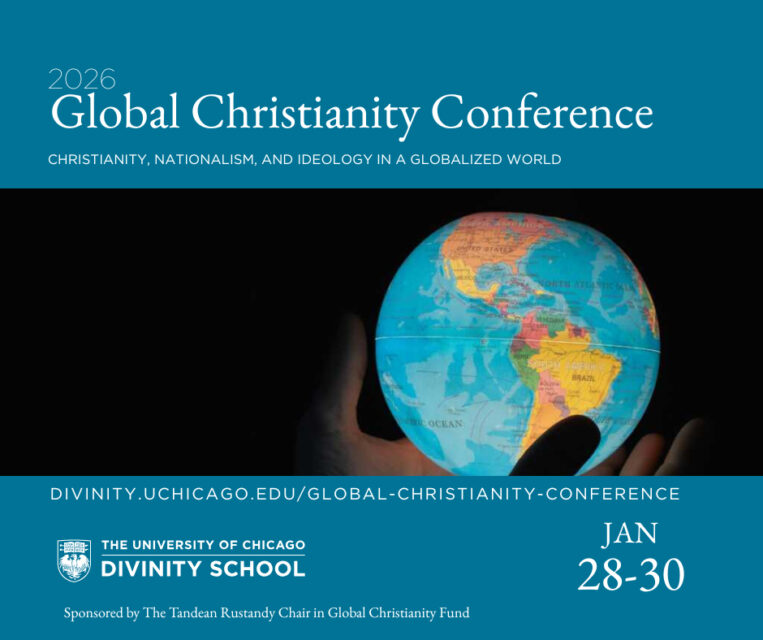
Christian nationalism isn’t limited to US, say scholars meeting in Chicago

(RNS) — Scholars from around the world are gathering in Chicago this week to focus on Christian nationalism, which they say is growing in influence globally.

“Christian nationalism is not a single ideology, nor is it confined to one nation,” said Abimbola Adelakun, associate professor of global Christianity at the University of Chicago Divinity School and organizer of the conference. “Across the world, Christianity is being invoked to legitimize political authority and exclusionary visions of belonging. This conference brings global perspectives together to better understand how these movements operate and why they matter.”

The first of what organizers say will be an annual event, the conference is designed to look at issues affecting Christians around the world, said Adelakun. “This year, we’re looking at Christian nationalism, because it’s the most topical issue,” she said.

“We are trying to understand this phenomenon of Christian nationalism. What does it mean for Christianity?” she said. “What does it portend, and where do we go from here?”

She said the scholars invited to the conference have defined Christian nationalism as an attempt to make Christianity the “defining or governing moral order of the nation.” That’s a complicated undertaking in a democratic society. “From an ethical view,” she said, “Christianity is a great religion that can define the moral order. But then again, it is now being weaponized against different categories of people.”



The idea that only Christians should wield political power can lead to a rejection of democratic ideals, said Adelakun, including religious freedom. She offered the example of Zambia, which was officially declared a Christian nation in 1991. While Zambia bans discrimination against other faiths, there have been attacks on non-Christians, according to the U.S. State Department.

A Zambian scholar will be one of the speakers at the conference, which has registered some 60 scholars and members of the public in all. Others presenting case studies are coming from Ghana, Zambia, Cameroon, Norway, South Korea, Pakistan, Romania and Russia, as well as the United States and several Latin American countries. The event begins on Wednesday (Jan. 28) and runs through Friday at the University of Chicago on Chicago’s South Side. Lectures will be streamed online

The conference will kick off with a keynote lecture from Nimi Wariboko, a professor of social ethics at Boston University. Valentina Napolitana, an anthropologist from the University of Toronto, will also give a keynote address. 

Adelakun said some Christians around the world have reshaped American Christian nationalism for their own context, while in other countries, the Christian nationalism is homegrown and often developed as a way to oppose colonialism. “It was a way to say we are not going to reject Christianity because of the defect that it has, but we’re going to create an African Christianity,” she said.

She said Christianity can be a powerful force for organizing and allows people from different backgrounds and cultures to unite around a common faith. But it can also be used as a weapon against people who don’t share those beliefs.

James T. Robinson, dean of the divinity school, said the conference helps further the public understanding of religion. 

“Understanding the political uses of religion requires careful historical and comparative scholarship,” Robinson said in announcing the conference. “This conference reflects the Divinity School’s commitment to examining religion’s public life with global reach and intellectual precision.”


Original Source:

https://religionnews.com/2026/01/28/christian-nationalism-isnt-limited-to-the-us-say-scholars-at-the-university-of-chicago/