(RNS) — A bill currently before Israel’s legislature, the Knesset, is bringing the long-debated and divisive issue of prayer at the Western Wall to a head.
Israel’s parliament has given preliminary approval to a bill that would put the country’s Orthodox Chief Rabbinate in charge of the Western Wall, known in Hebrew as the Kotel, in Jerusalem. The law would make it illegal to hold non-Orthodox and mixed-gender prayer at the holy site.
Prayer? Divisive? Here’s some background. When Israel captured Jerusalem in the 1967 Six Day War, the area in front of the Western Wall was cleared and paved. As a remnant of the Second Temple era some two millennia ago, abutting where the Temples stood, it immediately became a prominent place of Jewish prayer.
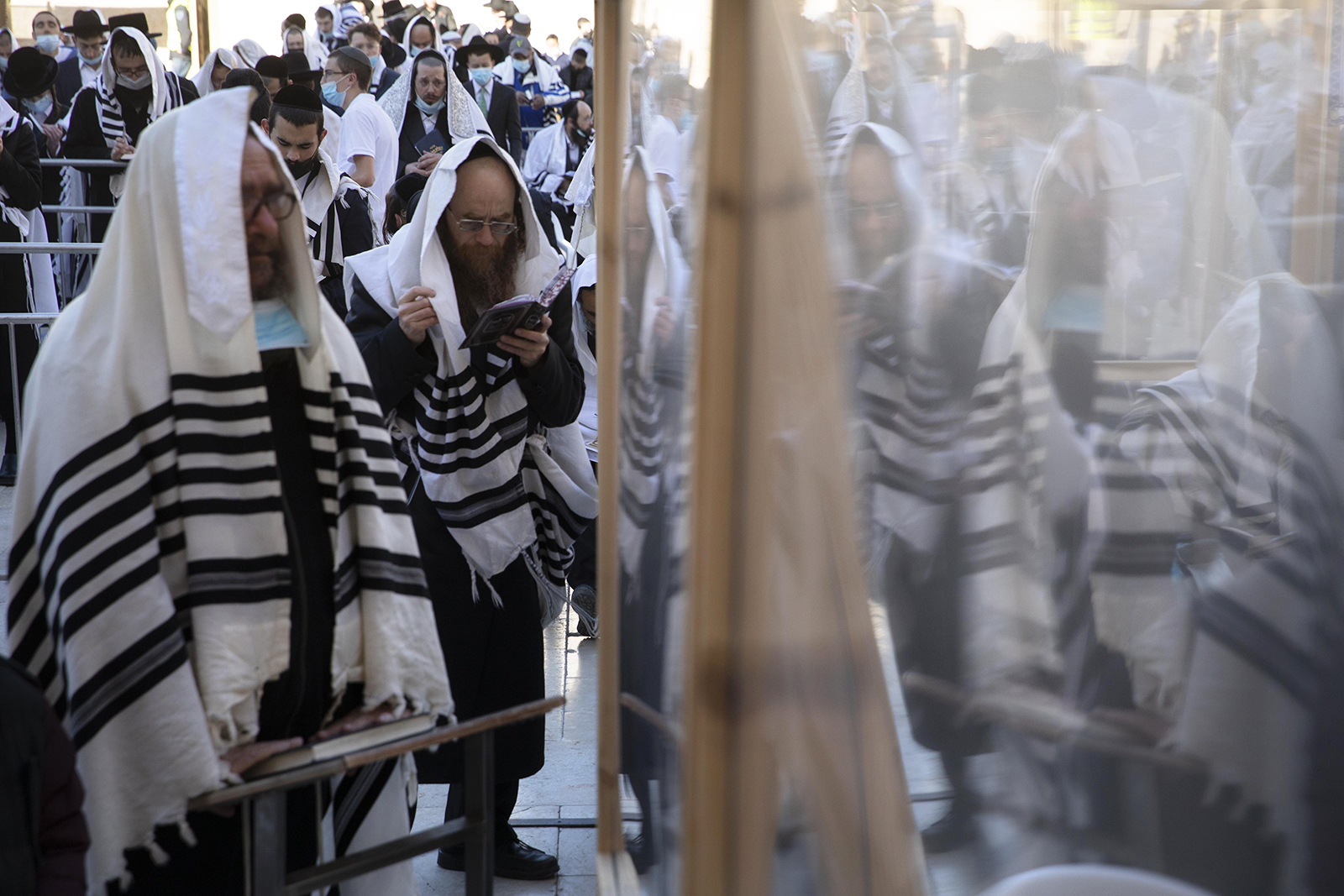
Jews and non-Jews alike have come to the Kotel plaza over the ensuing decades to pray. And in respect for the Jewish religious tradition, which mandates separation of the sexes in places of prayer, a movable partition was erected and designates one side for men and one for women. On Jewish festivals, tens of thousands of men and women gather at the wall over the course of a day.
Prayer services at the site have also, since 1967, been conducted in accordance with Jewish religious law, which designates men as service leaders and Torah chanters. Jewish law considers it a breach of modesty for men to hear women singing.
Those standards — even if they may not be the personal ones of all visitors to the Kotel — were respected by all for decades. The Kotel plaza has remained a religious oasis of sorts and is probably the only place on Earth where Jews of different religious beliefs — not to mention adherents of other religions — prayed side by side.

In the late 1980s, though, a feminist group decided to challenge those standards, holding vocal services and Torah chanting in the plaza with camera crews at the ready to record and publicize the events. Traditional Jews opposed the attempt to change the character of the holy place, and years of strife ensued.
In 2016, the Israeli government approved a compromise, establishing a prayer section at the southern end of the Kotel for nontraditional and mixed-gender prayer services. It has been used occasionally but is in need of a physical upgrade to facilitate access and ensure people’s safety. Israel’s Supreme Court recently ordered that the state properly attend to the space.
Now, if the bill before the Knesset becomes law — it passed its first reading by a margin of 56-47 but needs to undergo three more readings to be enacted — the nontraditional space will be eliminated.
As might be expected, that possibility has raised hackles, especially among non-Orthodox American Jews. The vast majority of Israeli Jews identify as Orthodox, traditional or secular. The Reform and Conservative movements are not popular in Israel, as they are in the United States, and are estimated to comprise only 2% to 8% of the citizenry.
Why, the objectors ask, should those identifying with non-Orthodox forms of Jewish religious expression not enjoy the same privilege as the Orthodox, and be able to publicly pray at the Kotel in their own way?
It’s a reasonable complaint, but as in every controversy, it’s worthwhile to try to understand both sides of the issue. The non-Orthodox position is that the issue is one of simple fairness and is well represented in most Jewish and general media. The Orthodox one, not so much. But, agree with it or not, it exists and deserves consideration.
The Kotel, while it is open to the public, is not a public place. It’s a religious site analogous to St. Peter’s Basilica in the Vatican. Not only are visitors to that Catholic holy place required to wear clothing that covers shoulders and knees and to show respect for the site, they are prohibited from conducting non-Catholic services there. Others are, of course, welcome at St. Peter’s. But conducting their own public services there would be regarded as a violation of the site’s religious identity.
The Kotel has functioned as an Orthodox synagogue since 1967, when it was — pardon the incongruous expression — rechristened as a Jewish holy place. Balkanizing it so that feminist and nontraditional services can take place in part of the area abutting the wall is seen by most Orthodox Jews not as a benign nod to fairness, but an offense to the site’s religious identity.
Nontraditional Jewish prayer services in Israel can take place, of course, as they always have, in nontraditional houses of worship anywhere in the country or in other public places. There is full freedom of religion in Israel. But, at least to Orthodox Jews, conduct at the Kotel, the remnant of the courtyard wall of the holy Second Temple, should rightly reflect the standards of time-honored Jewish religious tradition.
Should the proposed bill end up becoming law, my hope is that my non-Orthodox fellow Jews will, even in their disappointment, recognize the legitimacy of that contention. And I hope they will join their Orthodox brothers and sisters — even if they’re on different sides of the partition — in heartfelt prayer at the Kotel.
(Rabbi Avi Shafran writes widely in Jewish and general media and has a Substack here. The views expressed in this commentary do not necessarily reflect those of Religion News Service.)
Original Source: