NAIROBI, Kenya (RNS) — When gunmen stormed villages near Makurdi in Nigeria’s Benue state last year, Pastor Emmanuel Ochefu said the attack felt personal.
“They came at night, shouting and burning homes,” said Ochefu, who leads a small Pentecostal church outside the city and spoke with RNS by phone. “Most of the people killed were Christians. We cannot pretend that our faith is not part of why we are targeted.”
Nigeria was the first country mentioned in the introduction of the U.S. Commission on International Religious Freedom’s annual report that was released on Wednesday (March 4), describing its “terrifying crisis of religious violence” and connecting it to the politics of the country. “Nigeria’s religious freedom environment is contextually unique in terms of its violent and complex perfect storm of religious, political, social, and economic factors, but it is representative of the alarming persistence of freedom of religion or belief (FoRB) violations that continue to plague millions of people across the globe,” reads the report from the independent bipartisan agency. The report details sacrifices of many thousands of “innocents on the altar of religious bigotry” and mass abductions that have devastated religious communities in the north and central regions of the country. In addition to extremist violence the commission says is religiously motivated, it also points to “corrosive” blasphemy laws at state levels and “pervasive corruption” in the government of Nigeria.
For many Christians in Nigeria’s Middle Belt and northern regions, experiences like the attack on Makurdi have reinforced a deeply held belief that they are being persecuted because of their religion.
Yet security analysts, government officials and Muslim leaders say the reality behind Nigeria’s violence is far more complex —rooted less in religious ideology than in a volatile mix of criminality, competition over land and resources, climate pressures and decades of weak governance.

The debate reflects a broader struggle to understand one of Africa’s longest-running security crises, which, according to the USCIRF report, has killed almost 53,000 Nigerian civilians due to “targeted violence” since 2009, the year the commission first recommended it be labeled a “country of particular concern.” In 2020, Nigeria was designated by the State Department with that label, marking it as one of the most egregious violators of religious freedom. That designation was removed in 2021, but President Donald Trump announced in October that Nigeria had received it again. Additionally, the crisis has displaced millions over the past 15 years.
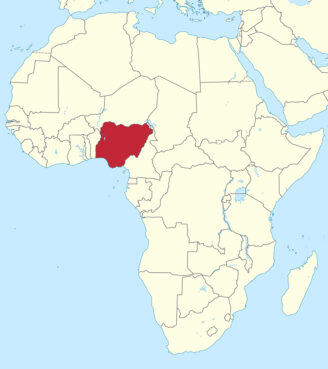
Nigeria, Africa’s most populous country, with more than 200 million people, is broadly divided between a predominantly Muslim north and a largely Christian south. Much of the violence has been concentrated in the northeast, where Islamist insurgents such as Boko Haram and its splinter groups have waged a deadly rebellion since 2009.
But attacks also occur in central states such as Benue and Plateau, where disputes between farming communities, often Christian, and mostly Muslim nomadic herders have escalated into cycles of revenge killings.
Security analyst Peter Akachukwu, based in Lagos, said reducing the violence to a simple religious narrative risks obscuring its underlying drivers.
“What we are seeing is not purely religious persecution,” Akachukwu told RNS in a phone interview. “Yes, identity plays a role in who is attacked and how communities interpret the violence. But fundamentally, this is about competition for land, poverty, weak law enforcement and organized criminal networks exploiting those divisions.”
He said armed groups often target vulnerable communities regardless of faith, driven by economic motives such as cattle rustling, ransom kidnappings and territorial control.
“Religion becomes a marker,” he said. “It is not always the root cause.”
Rising death toll fuels persecution narrative
Still, data from advocacy groups shows why many Nigerian Christians view the crisis through a religious lens.
According to Open Doors, a global Christian watchdog organization, more Christians are killed for their faith in Nigeria than anywhere else in the world. In its 2025 World Watch List, the organization reported at least 3,490 Christians were killed in Nigeria in their latest reporting period — accounting for the vast majority of Christian deaths recorded globally that year.
The group says violence by jihadist insurgents, including Boko Haram and Islamic State West Africa Province, as well as attacks by armed militants in central Nigeria have disproportionately affected Christian communities.
Over a longer period, estimates vary widely, but some advocacy and monitoring groups report that tens of thousands of Christians have been killed since the insurgency began more than a decade ago, with thousands abducted and churches destroyed.
At the same time, United Nations data underscores that the overall conflict is far broader. The insurgency in northeastern Nigeria alone has killed nearly 350,000 people, including deaths linked to violence, displacement and humanitarian crises.
Analysts say the figures illustrate the complexity of the crisis.
“The numbers show that Christians are heavily affected,” Akachukwu said. “But they also show this is a massive national security breakdown impacting all communities.”
For many Christian leaders, however, the pattern of attacks on predominantly Christian villages reinforces a sense of deliberate targeting.
Pastor Moses Mashat, who leads an evangelical church in central Nigeria, said repeated assaults have created deep fear among believers.
“When churches are burned and Christian communities are attacked again and again, people cannot ignore that,” Mashat said by phone. “For many Christians, this feels like persecution, even if the government calls it something else.”
Church leaders say the psychological impact has been profound, fueling displacement, mistrust and trauma.
Ochefu said his congregation has shrunk as families flee to safer areas.
“People are afraid to gather,” he said.

Government and Muslim leaders reject genocide claims
Nigerian officials have consistently rejected claims that Christians are being singled out for extermination.
Kimiebi Imomotimi Ebienfa, a spokesperson for Nigeria’s Ministry of Foreign Affairs, said in recent interviews that while the country faces serious security challenges, the violence affects all religious communities.
“There is no Christian genocide in Nigeria,” Ebienfa said in a November 2025 interview. “Muslims are being killed. Traditional worshippers are being killed. The violence is not restricted to one group.”
Information Minister Mohammed Idris has similarly argued that the insecurity is driven primarily by banditry, terrorism and criminal activity rather than religious ideology.
Muslim clerics in northern Nigeria say their communities have also suffered heavily.
Bashir Modu, a Muslim religious leader, said armed groups have devastated both Muslim and Christian populations.
“People are being slaughtered regardless of religion,” he said. “We must stop seeing this only through a religious lens and focus on protecting all communities.”
Modu warned that framing the conflict solely as a Christian-Muslim struggle risks deepening divisions and undermining peace efforts.
Despite tensions, political and religious leaders on both sides say faith communities also play a crucial role in peacebuilding.
“(Nigeria’s) two largest religious communities, Christians and Muslims, have long shared their lives with each other, with followers of traditional African religions, and with many others — and yet they now face an existential struggle and dangerous confluence of armed conflict, nonstate violence, state restrictions, and societal challenges,” reads the USCIRF report.
Interfaith groups in several states have organized dialogue forums, early warning systems and joint humanitarian relief efforts for displaced families.
As Nigeria’s insecurity continues, experts say the debate over whether the violence constitutes religious persecution may miss the broader reality.
“It is both identity and structural failure,” Akachukwu said. “Communities experience attacks through religious identity, but the root causes go far deeper.”
For Pastor Ochefu, the distinction matters less than the human cost.
“People just want to live without fear,” he said.
Adelle M. Banks contributed to this report.
Original Source: