(RNS) — Questioning Tulsi Gabbard, the U.S. director of national intelligence, on Wednesday (March 18), Sen. Jack Reed, D-R.I., suggested that it might not have been such a good idea to assassinate Iran’s leader, Ayatollah Ali Khamenei, at the outset of the U.S.-Israeli war on the Islamic Republic. Here’s the exchange:
Reed: “The regime in Iran is now trying to promote the deceased ayatollah as a martyr who should be followed. Does that help them consolidate support?”
Gabbard: “Senator, the Iranians are certainly using that as a call to action. The effects of that from an intelligence standpoint remain to be seen.”
Reed: “There is a tradition in Shia, though, to honor martyrs. One of their greatest celebrations is the martyrdom of the grandson of Muhammad. Is that correct?”
Gabbard: “That’s right.”
Reed: “So we might have played into their cultural biases, erroneously.”
That understates what we’ve played into. Khamenei is not just another Shiite martyr. He was believed to be a direct descendant of Hussein ibn Ali, the grandson of Prophet Muhammad whose martyrdom serves as the defining story of the Shiite tradition. That story has been central to the Iranian regime’s response to Khamenei’s death.
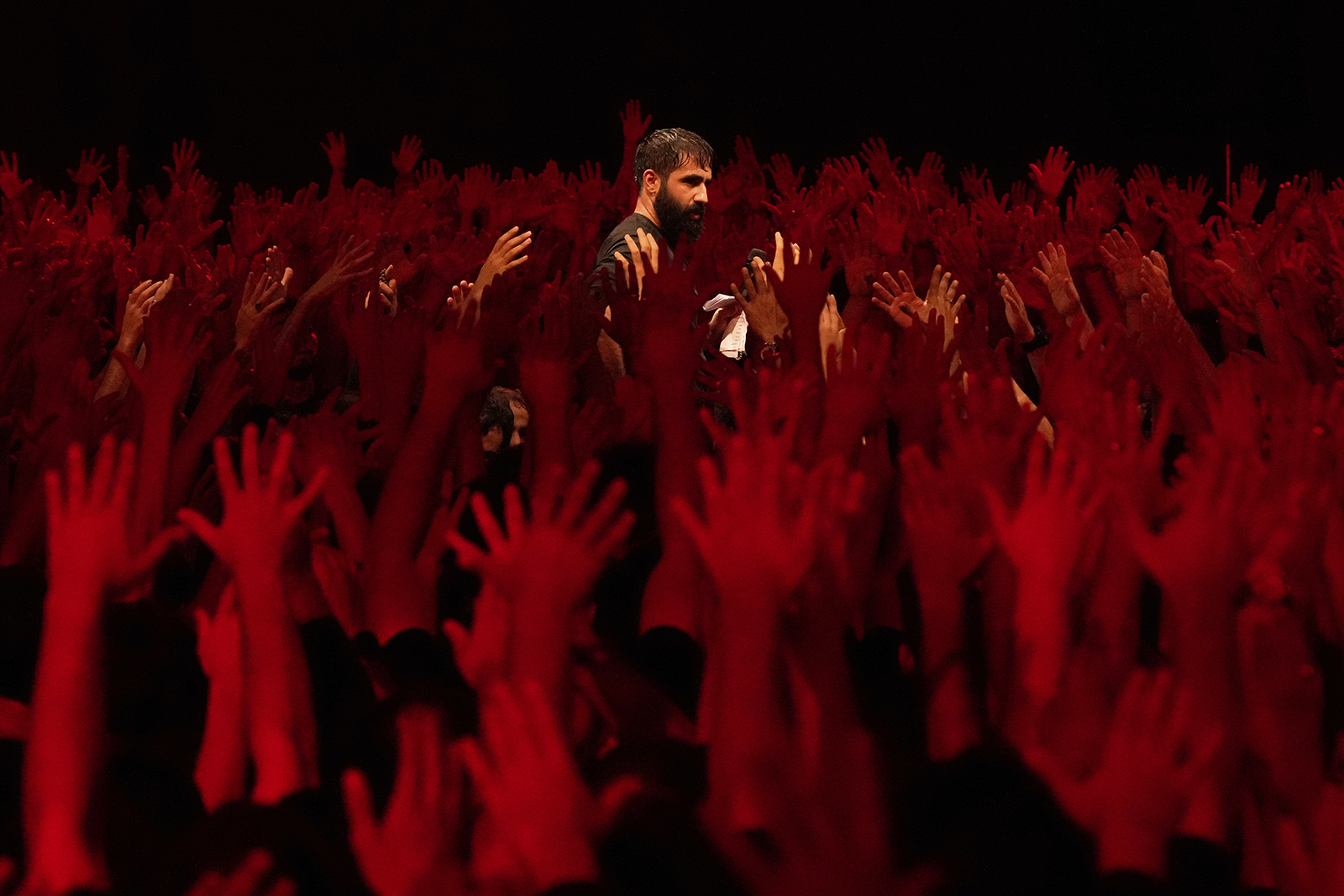
In the wake of Muhammad’s death in 632, the Muslim community became divided between followers of his father-in-law, Abu Bakr, and followers of his cousin and son-in-law, Ali ibn Abi Talib. After inheriting his father Ali’s leadership, Hussein and a number of his relatives and companions were killed by Abu Bakr’s heir, Yazid ibn Mu’awiya, at the Battle of Karbala in 680.
Yazid’s followers became the Sunnis; Hussein’s, the Shiites. And to this day, Shiites celebrate the Muslim holiday of Ashoura as a time of mourning for Hussein.
With this historical context, no one should have been surprised that the Iranian regime has portrayed the killing of Khamenei, together with his relatives and associates in the Iranian regime, as a recapitulation of the martyrdom of Hussein. And, notwithstanding Gabbard’s claim that we’re still waiting to see the effects, we can discern one of them in the choice of Khamenei’s son, Mojtaba, as his successor.
According to reports, Mojtaba barely survived the bombing that killed his father and other relatives. Hussein’s son, Ali ibn al-Hussein al-Sajjad, who managed to survive the Battle of Karbala, was likewise chosen to lead the nascent Shiite movement after Hussein’s death.
Let us bear in mind that Iran’s 1979 revolution established it as a theocratic state under the direction of an imam — in the Shiite tradition, the supreme religious authority. While millions of Iranians rejoiced at the death of Khamenei, who had presided over a murderous, repressive regime, it is inadequate to attribute the regime’s ongoing resistance to U.S.-Israeli war-making merely to the need to protect its own existence in power.

For the Iranian regime, the war is also an existential threat to the faith it has upheld for nearly half a century. The Trump administration, which itself relies heavily on religious motivation, might have thought twice about the wisdom of turning Iran’s supreme religious authority into a martyr. But not thinking twice is pretty much the administration’s forte. Erroneously.
Original Source:
https://religionnews.com/2026/03/19/why-the-iranian-regime-fights-on/