(RNS) — A study group established by Pope Francis after the Synod on Synodality has called for a greater role for the laity and clergy in the selection of bishops, especially by involving the diocesan priests’ council and pastoral council.
The study group was set up in response to the synod’s call “to expand consultation with the faithful People of God, and to involve a greater number of lay people and consecrated persons in the consultation process.” The practical suggestions put forth by the study group represent a substantial expansion of the role of the laity and clergy in the process of choosing their bishop — and hark back to our current pope’s namesake.
Pope Leo the Great in the fifth century believed a true bishop should be elected by the clergy, accepted by the people and ordained by the bishops of the surrounding dioceses. This was a system of checks and balances that would have been loved by the writers of The Federalist Papers.
The clergy would meet and vote in the cathedral and then present their choice to the people waiting outside. If the people cheered, he was accepted. If they booed, the clergy would have to try again. There are faint echoes of this process in papal elections, where the cardinals, who are considered part of the Roman clergy, elect the bishop of Rome. The man chosen is then presented on the balcony of St. Peter’s to the people.
The final step in the process would be the candidate’s acceptance and ordination by the neighboring bishops, because a bishop is not just the leader of a diocese, he is also a member of the college of bishops.

While this is a beautiful theory, for too long the reality was that kings and nobles often controlled the process and selected relatives or political supporters as bishops, leading to widespread corruption in the church. Church reformers pushed to free the appointments from the influence of civil authorities by giving the pope absolute authority over the appointment of bishops.
Centralizing episcopal appointments in Rome led to its own problems: careerism, cronyism and an insensitivity to local conditions. Each pope had his own priorities in selecting bishops, which might have nothing to do with the situation in the diocese.
Paul VI wanted pastoral bishops who would implement the Second Vatican Council and get along with their priests. John Paul II and Benedict XVI wanted bishops who would implement their interpretation of Vatican II and root out clergy and theologians who dissented from papal teaching. Francis wanted bishops who were pastoral and close to the poor.
My guess is that Leo XIV wants bishops who can unify their flocks while preaching peace, justice and concern for the planet.
It is the bishop’s “duty to build communion among its members and with the universal Church by fostering the variety of gifts and ministries given for its own growth and for the spread of the Gospel,” Leo said on June 25, 2025. In this sense, “a clear sign of [the bishop’s pastoral] prudence is his exercise of dialogue as a style and method, both in his relationships with others and in his presiding over participatory bodies: in other words, in his overseeing of synodality in his particular Church.”
Centralizing the selection process in Rome does not mean ignoring input from local churches.
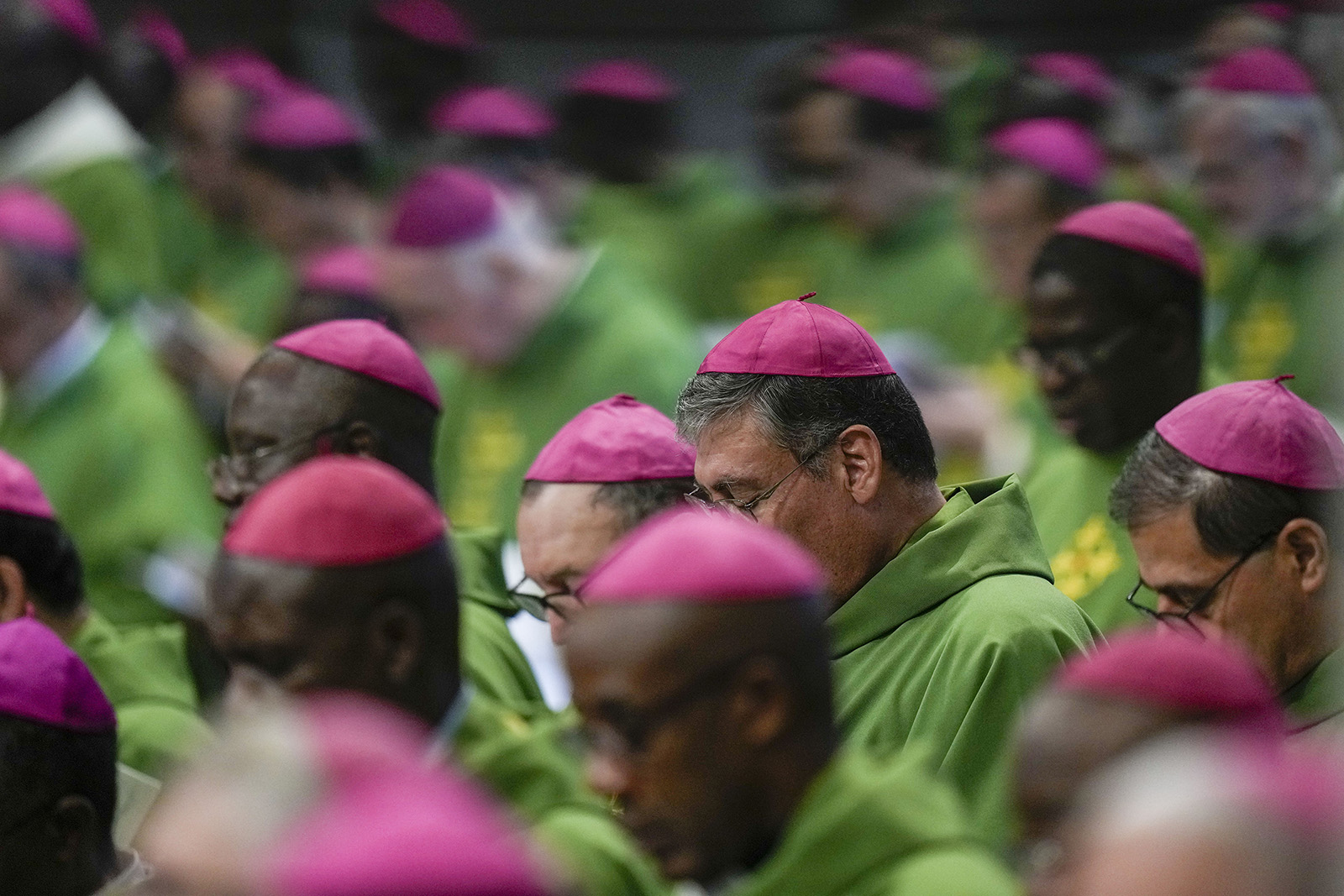
Currently, the bishops of a province meet every three years, under the leadership of the archbishop, to send a list of priests they think might make good bishops to the nuncio, the pope’s representative to the church and government of a country. In keeping with synodality, the study group wants presbyteral councils and diocesan pastoral councils to meet before the bishops have their meeting.
“In an atmosphere of common prayer and fraternal exchange,” said the study group, “each of these bodies will collegially formulate a written opinion on the state and needs of the diocese.”
And each member of these bodies will submit to the bishop, in a sealed envelope, “the names of priests serving in the diocese whom they consider suitable for the episcopate.”
Where possible, “the cathedral chapter, the diocesan finance council, the lay council, the unions of consecrated men and women, and diocesan groups that institutionally represent youth and the poor should also be convened.”
In addition, they are also to submit sealed envelopes with “an opinion on the profile of the future bishop of their Local Church and the names of bishops or priests (not necessarily serving in the diocese) whom they consider suitable for succession.” The envelopes should include the reason for the choices.
The bishop can also consult others and the results are sent to the nuncio and shared with the bishops of the province.
The nuncio is responsible for nominating three candidates for a vacant diocese after consulting with the bishops, clergy and people. He does this by sending a questionnaire about a candidate to select people, including clergy, religious and laity. He writes up a report on each nominee and on the diocese and sends them to the Dicastery for Bishops in Rome. Under the system recommended by the study group, he will now have additional input from the members of the priests’ council and pastoral council.
To help the nuncio in his work, the study group also recommends the establishment of a Committee for the Provision of the Local Church, made up of “two diocesan priests elected by the Presbyteral Council, two consecrated men/women and two laypersons elected by the Diocesan Pastoral Council, along with the Diocesan Administrator or Apostolic Administrator,” who runs the diocese when there is no bishop.
The committee members “take an oath to observe confidentiality, which does not prevent them from discreetly consulting other faithful of the local Church to gather useful information.” Then “the Nuncio relies on this Committee to clarify the state of the diocese, the profile of the new Pastor, and to receive opinions on possible candidates.”
These changes are incremental, not revolutionary, which is good. Those who fear change should not be scared because all of the input is advisory, not definitive. Those who want greater change, like the election of a bishop by the clergy and/or laity, should accept these changes as great improvements over the current process.
The study group’s recommendations are practical and easy to implement. They could be quickly adopted in the United States, where there is religious freedom and the government does not interfere in the selection of bishops.
Pope Leo is intimately familiar with the process for selecting bishops because he was head of the Dicastery for Bishops, which makes recommendations to the pope on bishops. These are sensible recommendations that he should accept. They are not what Pope Leo the Great wanted, but they are a great improvement over the current process.
Original Source: