VATICAN CITY (RNS) — On Monday (May 25), Pope Leo XIV will release his first major papal document, an encyclical titled “Magnifica Humanitas” or “Magnificent Humanity,” expected to update Catholic social teaching for the age of artificial intelligence.
Leo signed the document May 15, on the 135th anniversary of “Rerum Novarum,” the landmark 1891 encyclical by his namesake, Pope Leo XIII, that laid the foundations for modern Catholic social thought by defending workers and unions amid the upheaval of the Industrial Revolution.
The parallel is deliberate. Since his election a little over a year ago, Leo has repeatedly described AI as a new industrial revolution, one whose consequences reach far beyond technology into war, labor, education, communication, truth, community and the environment.
“The challenge we currently face is not technological, but anthropological, and it is my hope that the Encyclical Letter to be published within a few days will contribute to answering this challenge,” Leo wrote in a post on X on Friday (May 22).
As evidenced by the unbridled promotion and implementation of technology at the expense of human dignity, we are truly experiencing an eclipse of the sense of what it means to be human. It is imperative to recover an understanding of the true meaning and grandeur of humanity as…
— Pope Leo XIV (@Pontifex) May 22, 2026
In an unprecedented move, Leo will personally present the document at the Vatican’s Synod Hall before an audience of curial officials and technology professionals, the Vatican said. Cardinal Víctor Manuel Fernández, prefect of the Dicastery for the Doctrine of the Faith; Cardinal Michael Czerny, prefect of the Dicastery for Promoting Integral Human Development; and Cardinal Pietro Parolin, the Vatican secretary of state, are expected to attend, along with two female theologians: Anna Rowlands, a professor at Durham University in the U.K., and Léocadie Lushombo, a professor of political theology and Catholic social thought at the Jesuit School of Theology of Santa Clara University in California.
Also present will be Christopher Olah, co-founder of Anthropic, the artificial intelligence company behind Claude. Anthropic has marketed itself as placing safety and ethics at the center of its work, but its presence at the Vatican event has already raised concerns among critics who warn the company may benefit from mere proximity to the church’s moral authority.

Leo has made roughly 30 references to AI since his election, offering a clear preview of the encyclical’s likely concerns. His first came May 10, 2025, when he told cardinals he had chosen the name Leo in light of Leo XIII’s response to the first Industrial Revolution and the church’s need to address “another industrial revolution” brought about by AI.
Since then, Leo has consistently framed AI as a question of human dignity rather than technical innovation alone. He has called for multilateral cooperation, regulation and ethical guardrails; warned that AI cannot replace human judgment, doctors, teachers, priests or real human relationships; urged that “the person” be placed “before the algorithm”; and cautioned against autonomous weapons and the delegation of lethal decisions to machines. In February, he rebuked priests tempted to use AI-generated homilies, saying AI “will never be able to share the faith.”
To address the numerous implications of AI, Leo created a task force bringing in all Vatican departments on May 16 to reflect on this issue. These actions and pronouncements offer a roadmap of what the papal document might address and how Leo understands the questions raised by AI.
“In this era of artificial intelligence, I encourage everyone to commit themselves to promoting forms of communication that always respect the truth of the human person, on which every technological innovation should be focused,” Leo told faithful gathered in St. Peter’s Square on Sunday (May 17).
That emphasis on humanity is already embedded in the title of the encyclical, which “suggests that the Church’s response will be one of affirmation, not fear: not technophobia, but a commitment to magnifying what is properly human,” wrote Jesuit Fr. Antonio Spadaro, undersecretary of the Vatican’s Dicastery for Culture and Education, in an online post.

At a conference on AI organized Thursday (May 21) by the Pontifical Urban University in Rome, experts and technology leaders echoed that view, describing the encyclical as a possible turning point in the Vatican’s long-running effort to shape the moral debate around artificial intelligence.
Mitchell Baker, co-founder of the Mozilla Project and the Mozilla Foundation, said AI cannot be left in the hands of a few wealthy companies. Drawing from Mozilla’s experience as one of the most successful open-source projects in internet history, Baker argued that AI should be designed so that people, governments and civil society groups can understand it, influence it and benefit from it.
“The ethos of ‘open’ is to enable more people to participate more deeply and more broadly,” she said, urging technologists to “design for participation” as AI systems are built. Baker said Pope Leo appeared to be on a similar path by grounding the AI debate in the question of what it means to be human.
Tristan Harris, co-founder of the Center for Humane Technology and a leading critic of social media’s effects on society, warned that AI companies are driven by a “race dynamic” among “countries, companies and egos” seeking market dominance. Concerns over jobs, relationships and the environment, he said, are too often pushed aside in a dangerous trajectory toward an “inhuman future.”
Speaking to journalists after the event, Harris said the encyclical does not need to solve every AI problem to matter, but to create pressure and convene those with power. “I think the Church or the Vatican has an incredible role to play in convening the people together,” he said, comparing the present moment to the dawn of the nuclear age and calling for the Vatican to host a new kind of Bretton Woods Conference for AI, referring to the global post-WWII summit that aimed to prevent global economic collapse.
Daniel Dzuban, who leads efforts on content authenticity and digital provenance at C2PA, underlined the risk that AI-generated images, audio and video could erode shared reality itself. “We must look to Pope Leo’s framework of responsibility, cooperation and education for inspiration,” he said, calling C2PA’s work on open standards for certifying the origin and history of digital content “a real-world example of Pope Leo’s framework in action.”
The Urban University conference was only the latest chapter in a dialogue between the Vatican and Silicon Valley that began to accelerate under Pope Francis. In recent years, figures such as Bishop Paul Tighe, Fr. Philip Larrey and Dominican Fr. Eric Salobir helped build informal bridges between Catholic thought and tech leaders through private Vatican audiences, Silicon Valley conversations and the Minerva Dialogues, which brought together prelates and executives including Eric Schmidt, Reid Hoffman and others under Chatham House rules.
A more formal track emerged through Vatican conferences such as “The Common Good in the Digital Age” in 2019 and the Pontifical Academy for Life’s 2020 conference on AI ethics, which produced the Rome Call for AI Ethics, signed by Microsoft, IBM, FAO and later Cisco. By 2024, Francis had made AI the theme of his World Day of Peace message and addressed the G7 on the issue, signaling that the Vatican no longer saw AI as a niche technology concern but as a defining moral question touching human dignity, inequality, truth and social inclusion.
But increasingly, tech leaders are seeking out religious and philosophical traditions as they confront the limits of their own ethical frameworks.
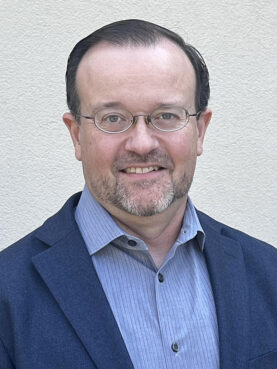
“It used to be very much Silicon Valley goes to Rome, but now it’s Rome goes to Silicon Valley,” said Brian Green, director of technology ethics at the Markkula Center for Applied Ethics at Santa Clara University and a longtime participant in Vatican-Silicon Valley conversations.
Green also told Religion News Service on Thursday that many tech leaders are recognizing their “blind spots” as AI systems become more powerful and harder to govern. “The capabilities are outstretching the morality, or the ethics, or the ethical resources that they have,” he said.
Some in Silicon Valley will dismiss the pope’s message, Green acknowledged. But others, he said, are eager for a moral authority capable of naming the stakes.
“If Pope Leo is the guy who can come out here and be the adult in the room, then that’s a really big deal,” Green said, adding his hope that “Magnifica Humanitas” will be not only a warning, but also an invitation.
“We can’t just leave it to a certain group of people to figure it all out for us,” Green said. “This is something that requires cooperation at the global level, and it has to be fundamentally an ethically oriented endeavor.”
Original Source: