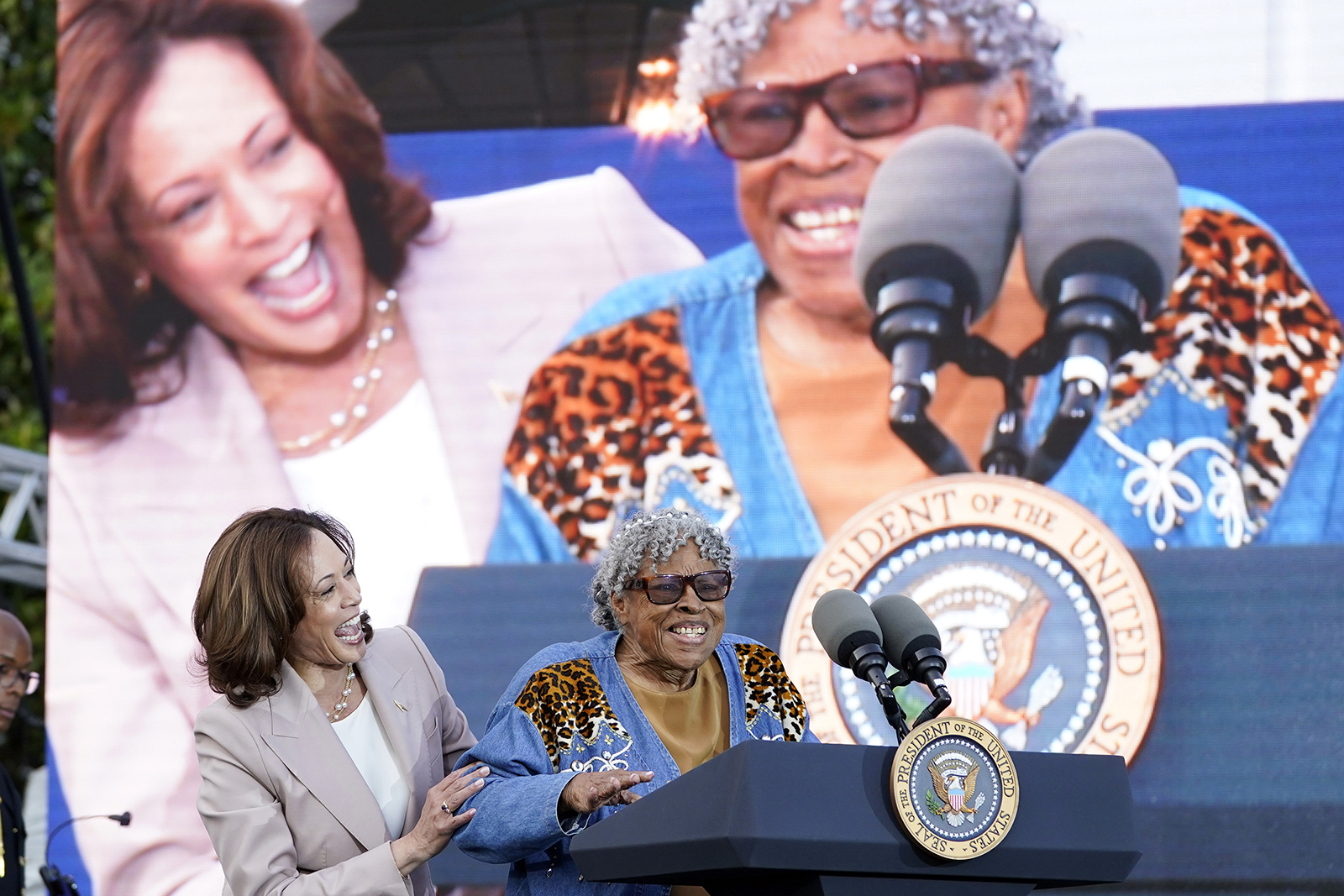
AUSTIN, Texas (RNS) — In 2016, 89-year-old Opal Lee walked from Fort Worth, Texas, to Washington, D.C., in hopes of establishing Juneteenth as a national holiday. Partly due to her efforts, it became one in 2021.
Juneteenth commemorates June 19, 1865, when the nation’s last enslaved people in Texas learned of their freedom. The news arrived over two years after Abraham Lincoln’s Emancipation Proclamation.
But for “the grandmother of Juneteenth,” the holiday carries a grief more personal than for most living today. When she was 12 years old, her family moved into a predominantly white neighborhood in Fort Worth. Shortly after, on June 19, 1939, a mob of over 500 white residents burned the family’s home down.
“It’s just another iteration of a lynching, in a way,” said the Rev. Marcus A.L. Freeman III, senior pastor of the historic Wesley United Methodist Church in Austin. “To just take everything you work for and just burn it down.”
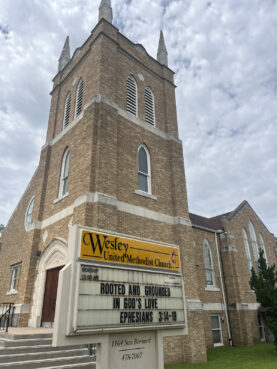
Founded in 1865 by newly freed people, Wesley is one of Austin’s oldest Black institutions. It’s also home to the city’s only lynching marker, which serves to document the history of lynching in America for current and future generations.
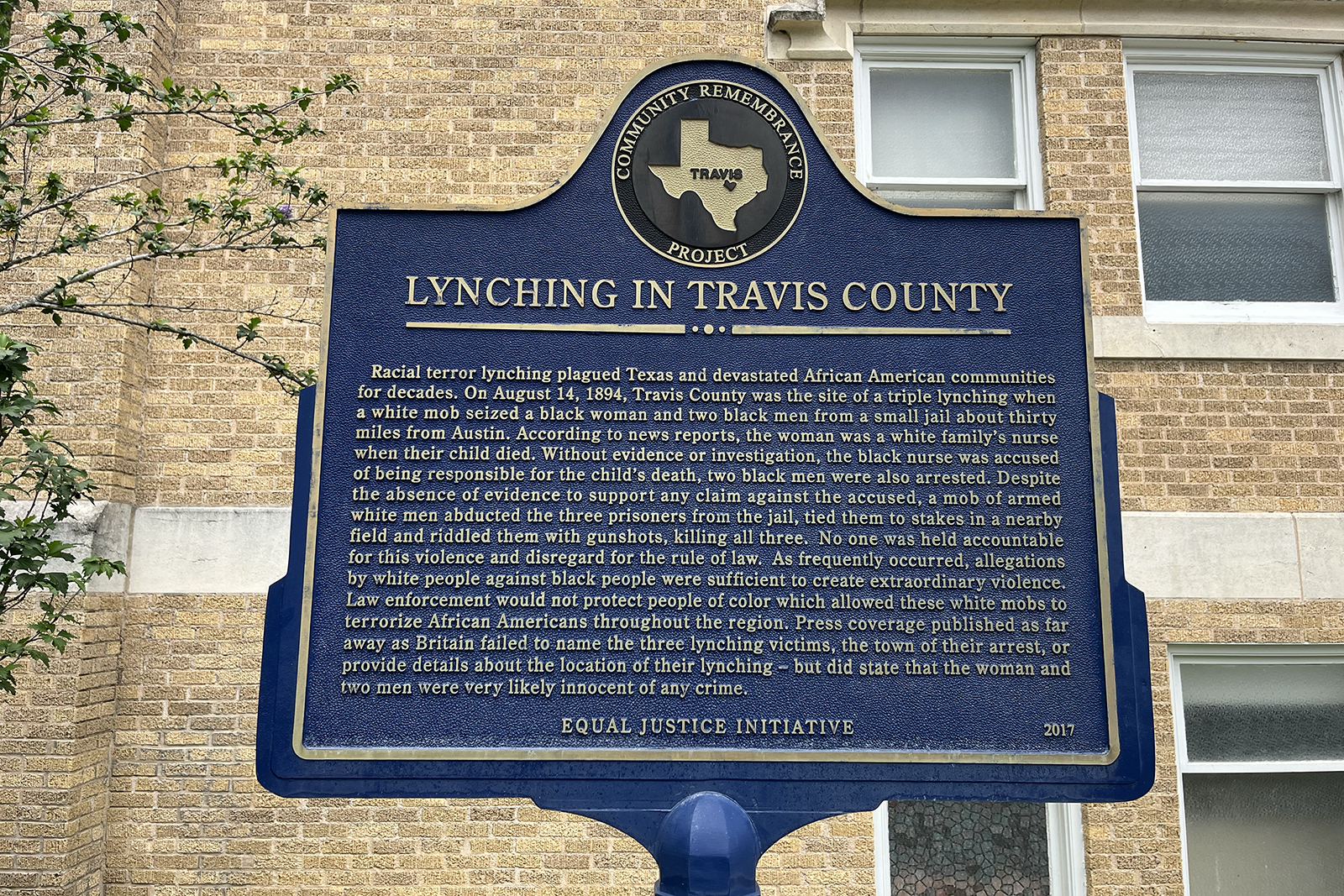
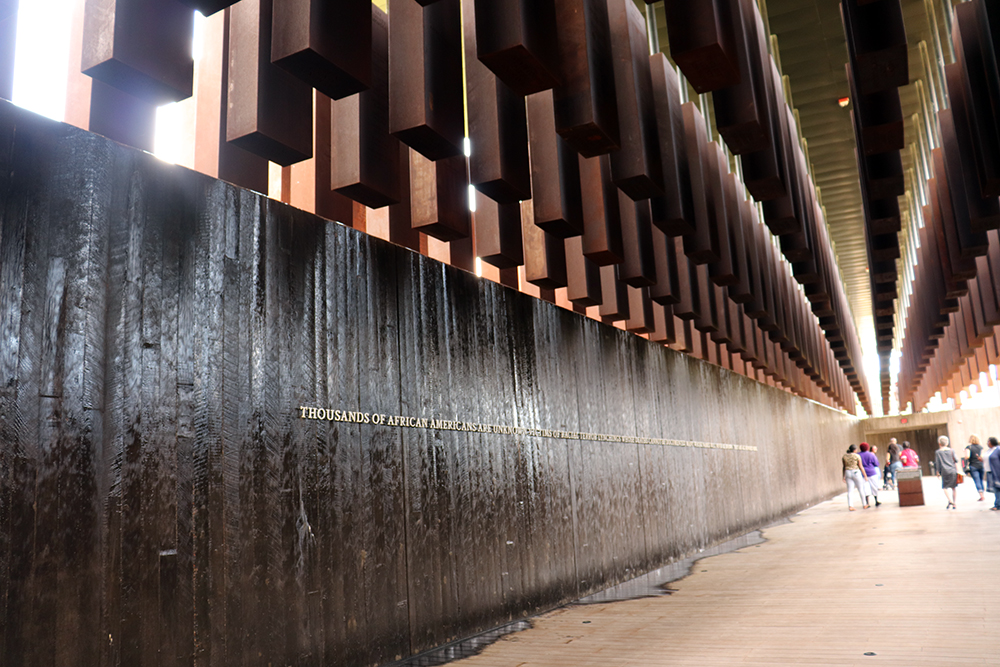
Installed in December 2017, the marker is one of over 80 such plaques erected across the nation by the Equal Justice Initiative’s Community Remembrance Project, which began placing the markers to help communities face the violent truths of their past. EJI also constructed the country’s first lynching memorial, the National Memorial for Peace and Justice, in Montgomery, Alabama.
Bryan Stevenson, EJI’s executive director, told RNS that Juneteenth is a time to celebrate emancipation but also to acknowledge continued harm. Despite the positive development in recognizing Juneteenth nationally, “Black people in this country were subjected to another century of torture violence.”
For Stevenson, the work is a matter of faith. Drawing on his own religious community, Stevenson told RNS that people cannot claim to want “heaven and redemption and salvation” but be unprepared to acknowledge, repent or confess to anything. The fact that very few people can name a single Black lynching victim, he added, reveals how much work remains.
Several of EJI’s lynching markers are placed on or near church properties. The Community Remembrance Project erects markers at locations where lynchings occurred, which in some cases have been churches. Yet in instances where very little is known about a lynching, the EJI has asked local Black churches to house the markers.
Black churches served as vital protective spaces for Southerners terrorized by lynchings near and far — which has made them appropriate homes for lynching history, Stevenson said.
That was the case for the marker at Wesley in Austin.
The plaque commemorates a triple lynching in August 1894 after a white child’s death while in the care of a Black female domestic laborer. Without evidence or investigation, the woman and two Black men presumed to be accomplices were quickly arrested. A white mob then abducted the three from jail, took them to a neighboring city, tied them to stakes and shot them to death. No one was ever charged with their killings. The few surviving records suggest the victims were innocent.
Their tragic story was not unique. From the late 19th to the mid-20th century, Texas was a leader in mob violence. The Tuskegee Institute recorded 493 lynching victims in Texas between 1882 and 1968 — 352 of whom were Black. Nationally, the same archive documented 4,743 people killed by lynching during that period — 3,445 of them Black. But many lynchings went unreported, and the actual statistics are believed to be far higher.
Like the three individuals commemorated by Wesley’s marker, many lynching victims were held in jails, often on false charges or scant evidence, when white mobs came for them. Law enforcement routinely served as willing accomplices and sometimes participated in lynchings.
In some cases, lynchings were communal spectacles that drew thousands and generated a tourist economy. The 1893 lynching of Henry Smith in Paris, Texas, was attended by at least 10,000 white men, women and children. Bound to a 10-foot-tall scaffold bearing the word “JUSTICE,” Smith was tortured for nearly an hour before his body, still alive, was set aflame. Smith’s bones, pieces of his clothing and photographs of his death became fiercely sought-after souvenirs.
No white person was ever convicted of lynching a Black American. And mob members did not conceal their identities when posing beside corpses they had lynched.
Several historians of religion have interpreted lynching as a form of Southern religious practice. Lynch mobs frequently conceived of their violence as divinely ordained justice and were known to praise God amid killings. The ritualized elements of lynching, including forced confessions, drawn-out physical torture and the exchange of relics in a post-lynching marketplace, bear unmistakable resemblances to religious ceremony.
And justifying it all were powerful mythologies of Black criminality, none more enduring than the myth of the “Black rapist.” Though accusations of sexual assault were mostly false — and though rape in the South has historically manifested as a crime with Black women as the primary victims — the defense that lynching was necessary for the protection of white women outlived all others.
These myths about Black criminality and inferiority trace their roots to enslavement, Stevenson said, allowing some to “feel moral and decent and Christian” as they sold human beings and then lynched them decades later.
With this context, placing a lynching marker at a Black church carries theological weight, functioning as a counternarrative on sacred ground. For Wesley’s church historian Arlene L. Youngblood, the symbolism is direct. “When you put daylight on something that’s ugly, something that’s shameful,” she told RNS, “Satan has to run.”
According to Youngblood, Wesley was the only Black church in Austin that agreed to take the EJI’s marker. “Even though it’s a sad circumstance,” Youngblood said it was an honor to be asked. And it took courage for Wesley’s reverend at the time, Sylvester Chase, to say yes, she added.
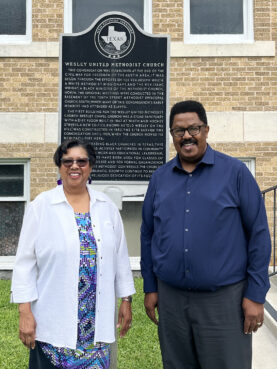
“It was a public acknowledgment (that) something has happened to us,” Youngblood said.
Since then, Freeman, the current senior pastor, has observed that the marker engenders a discerning “reverence” in those who walk by it, sometimes so totalizing that they don’t turn their heads as he passes behind them. “It’s amazing to watch,” he said.
Freeman sees those moments as an extension of what he calls Wesley’s “ministry of presence” and “ministry of information.” The church has a long educational history rooted in the traditions of the Black church and the theological commitments of the United Methodist denomination. The lynching marker, in his view, is fully consistent with Wesley’s tradition.
“If we don’t learn our history,” Freeman said, “we’re likely to repeat it.”
“And it’s still happening — that’s the killer,” Youngblood added.
For many Black Americans, the history of lynching has never felt distant. Instances of racial terror were not isolated events but part and parcel of systemic racism and white supremacy. Lynchings’ expansive violence reshaped the American landscape, leaving thousands dead and fueling the Great Migration of more than 6 million Southern Black refugees to the North and West, in addition to contributing to the continued disenfranchisement of African Americans.
As EJI research has shown, communities where lynchings occurred are areas that remain disproportionately poor and highly incarcerated. The Center for Justice Research has similarly demonstrated that states’ lynching rates predict current poverty levels, which in turn emerge as the strongest predictor of incarceration. The national incarceration rate of Black Americans is six times the rate of white Americans. Black people are also disproportionately sentenced to death, particularly when the crime involves white victims.
Notably, the first piece of anti-lynching legislation to be signed into law was the 2022 Emmett Till Antilynching Act, which made lynching a federal hate crime. The victory came decades after several failed attempts in the early to mid-20th century.
Stevenson and Youngblood join countless others who understand the police killings of George Floyd, Breonna Taylor, Michael Brown, Trayvon Martin, Ahmaud Arbery and far too many more as modern-day lynchings.
“They were victims of these presumptions of dangerousness and guilt because of their color,” Stevenson said, adding these presumptions are themselves an enduring legacy of slavery’s “great evil” — the false narrative “that somehow Black people aren’t as good as white people or less human, less evolved, less decent.”
“We are not yet free of that narrative,” Stevenson said. “The work remains.”
Stevenson envisions America’s 250th birthday, like Juneteenth, as an opportunity to celebrate but also to acknowledge persisting challenges and commit to overcoming them. The effort of installing lynching markers that draw people of diverse racial backgrounds together “to talk about these tragic incidents of the past and to commit to a healthier future” is, he said, “a microcosm of what the whole nation must do.”
Those at Wesley who shepherd Austin’s only lynching marker are similarly sitting with the full weight of that paradox. Youngblood cited a lack of affordable housing, widespread homelessness, the school-to-prison pipeline that disproportionately affects Black youth, deep cuts to the Supplemental Nutrition Assistance Program and ongoing redistricting and gerrymandering as reasons for grief, not celebration.
“This is the best country in the world,” Youngblood said. “But right now, this is not a pretty year to celebrate America.”
Freeman has found inspiration from Opal Lee herself. In a recent Texas Co-op Power article, Lee, now nearly 100 years old, laughed off the idea of retirement. “People who are old can’t sit in a rocking chair and wait for the Lord to come and get them,” she said. “There’s still plenty of work to be done.”
“The struggle continues, as we say,” Freeman concurred.
Original Source:
https://religionnews.com/2026/06/18/preservers-of-lynching-history-blend-faith-with-juneteenth/