(RNS) — For Aymann Ismail, the urge to pen a memoir about his journey through faith into fatherhood came out of a period of crisis around how to safely raise a son in the United States. For Patton Dodd, fatherhood, father figures and faith became a collective topic that wouldn’t release him until he wrote about it.
Dodd, a Christian, is the executive director of media and communications for the H.E. Butt Foundation in Texas, and Ismail, who is Muslim, is a staff writer at Slate Magazine. Their memoirs both delve into their fatherhood journeys related to their religious perspectives, yet portray vast geographical, cultural and socio-economical differences. But in a time when communities seem to be spiraling more and more into siloed and divisive living, their unique stories coalesce into quintessential American experiences with unexpected commonalities.
Ismail’s memoir, “Becoming Baba,” published last summer, traces his upbringing in Jersey City, New Jersey, as the son of Egyptian immigrants. His childhood volleyed between mosque life and Islamic school under the watchful eye of his mother. The events of 9/11 became a definitive marker in his life, when he was thrust into public school after his parents decided it wasn’t safe to stay in the Islamic bubble of his former school.
That single move changed his world overnight, as Ismail navigated friendships, flirtations and family. It eventually led to a journalism career as he attempted to figure out why the world around him and communities like his are often stereotyped and misunderstood.
Then, fatherhood turned all his questions inward — especially around how to model and teach his Islamic faith to his children while still figuring out his own Muslimness.
As Ismail and I are both Muslim American journalists, we’ve crossed paths several times over the years. I eagerly read and related to his journey to embrace the wholeness of his religion and culture while parsing out what of it he actually wanted to pass on to his kids.

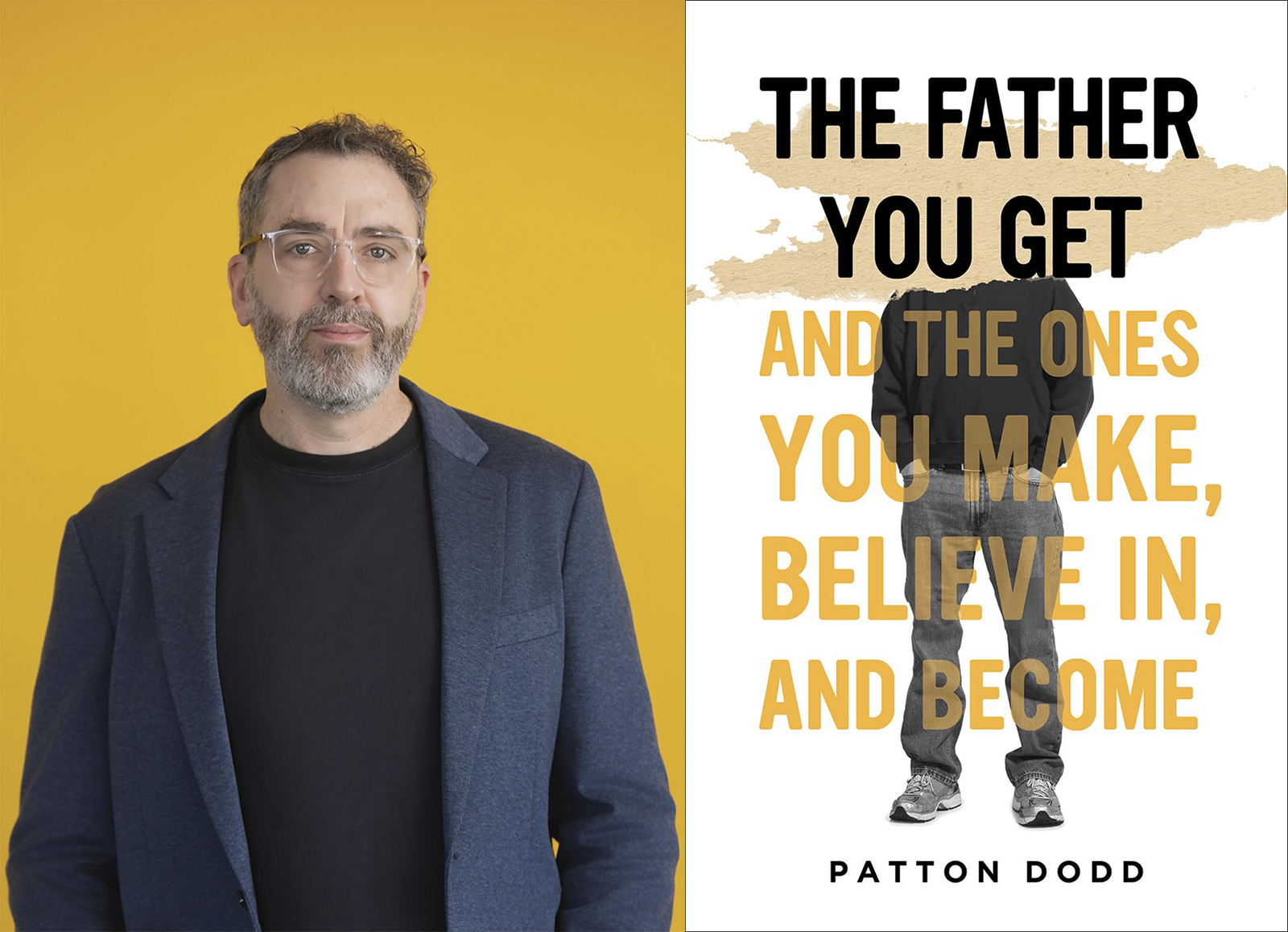
Months later I picked up Dodd’s memoir, “The Father You Get and the Ones You Make, Believe In, and Become,” curious to read his reflections on fatherhood and father figures. Dodd and I also worked at the same media site for a brief period, and I’ve known him to be a thoughtful and care-driven writer and storyteller. But I wasn’t ready for the emotional involvement of bearing witness to his grappling with the legacy and absenteeism of his alcoholic father, and how it spurred his yearning for father figures and questions surrounding his Christian faith.
Fatherhood is in decline. In the 1980s, about 66% of men between the ages of 25 and 45 were fathers, while today, 53% are, according to the General Social Survey. Meanwhile, conservative groups advocate for traditional nuclear families with men as the head of their households. Against this changing cultural backdrop, Dodd and Ismail, in their vastly different experiences of parenting and faith, model a kind of empathetic, inclusive, relatably flawed and matriarchy-influenced experience of fatherhood.
I brought Ismail and Dodd together in conversation to understand why masculinity was important to both of them from a young age and how faith lingered around the edges of their evolving manhood in ways that influenced them to keep it as part of their fatherly lives.
“I didn’t really understand at that time what my parents were up against and what they were trying to do (when I was a kid),” Ismail told me. “They were trying to implant in the next generation the muscle memory of our religion because of how ritualistic it was — from the prayers we pray to the duas we say. They knew this country would try to tear it away from them. … They pushed it so hard (because) it felt existential for them. What ended up happening to me was that I resisted. I felt like an American trapped in a Muslim society, whereas they felt like Muslims trapped in an American society.”
Ismail said it took meeting other Muslims who had different experiences than him and meeting his wife, who embodied the type of love and fear of Islam that he craved, to connect on a deeper level to his faith.
Dodd was also raised in a religious home and realized early on that the part of his family’s faith he wanted to carry into his adult life and his fatherhood journey was his mother’s faith. “For her, it was clearly a strength in great adversity,” he said. “It was a vibrance. She knew the scriptures backwards and forwards, and read and listened to sermons all the time. Even though I wasn’t sure what I believed exactly, I wanted that sustaining force for myself and my children.”
One reason to be part of a faith tradition and community is that it can be a sustaining force, Dodd said. “It can help you make sense of a complex and disappointing world. There is so much good that it can provide that in the absence of it, I’m fearful of what that may look like for my kids,” he told me.
While both Ismail and Dodd’s fathers feature prominently in stories, their mothers loom even larger. This was a deliberate choice in Ismail’s story, who through making his podcast, “Man Up,” had learned that the origins of myths about who men expect themselves to be often stem from how they want women to perceive them. “In that paradigm, how I was experiencing fatherhood came from wanting to achieve the standards set by my mom, sister and wife,” he said.
Dodd leaned heavily on three heroes in his life to figure out how to “do” fatherhood — also his mother, sister and wife. He explained: “My dad was such a void, so negligent in his addictions and absence. My mom filled that gap. I knew that the best way to reflect on how I approach being a father was to tell the story of my mom’s faith. It was lively, beautiful, thorny, persistent faith amidst the challenge of her own marriage. I ended up realizing that I could best describe who I understand God to be by discussing the way my mom understands God.”
Both Dodd and Ismail found examining fatherhood and faith to ultimately drive unflinching self-exploration. “So many people have complicated relationships with their father — dad-sized holes in their hearts,” Dodd said. “We need to take the time to face these hard, dark spaces.”
Whether it’s the unpacking of a first-generational Muslim experience that shaped the kind of father Ismail wanted to be, or Dodd’s coming to terms with God’s plan for his family — while carrying the weight of a broken patriarch — these stories are about making peace, learning what it means to be a good person and father, and how to hold on to faith through it all.
(Dilshad D. Ali is a freelance journalist. The views expressed in this commentary do not necessarily reflect those of RNS.)
Original Source: