Sidebar
Religions Around The World
World Religions News
Jews of Morocco: Beauty, Memory and Loss
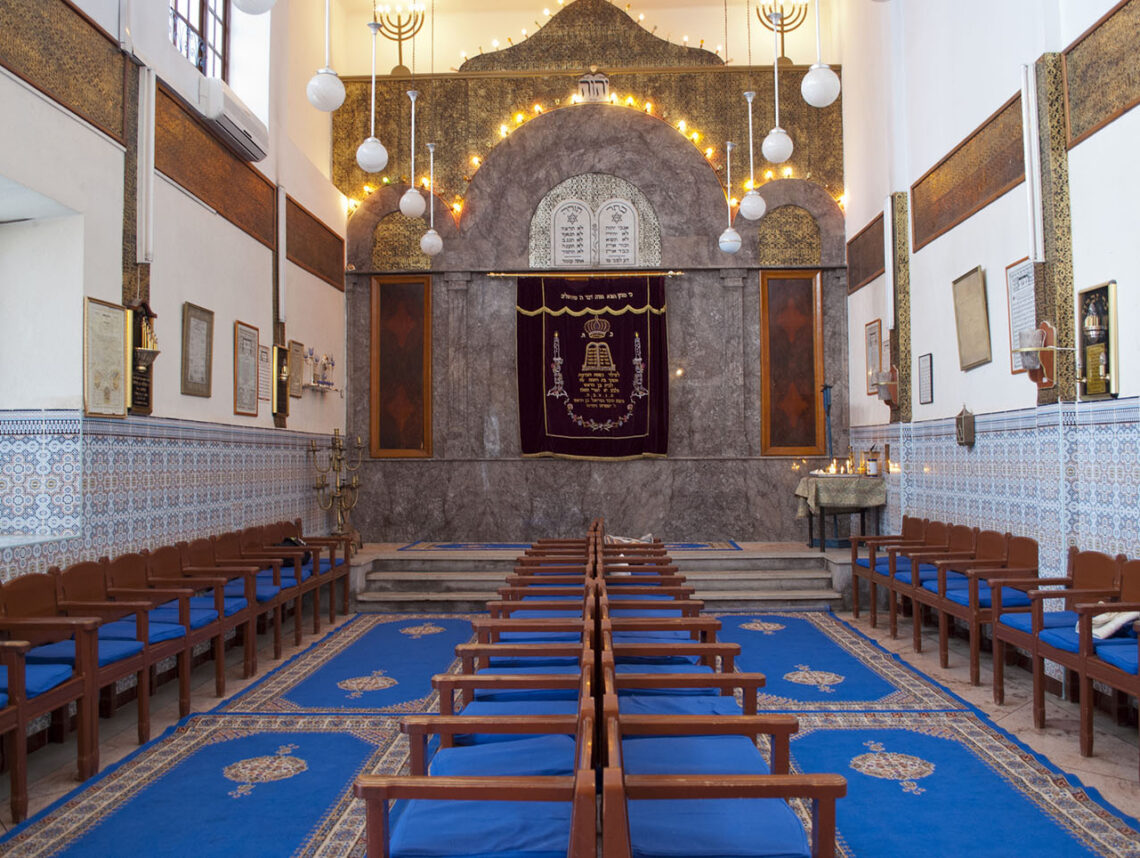 Our trip to Morocco was not simply a tour. It was an encounter with both the beauty and fragility of Jewish life in exile.
The post Jews of Morocco: Beauty, Memory and Loss appeared first on Jewish Journal.
Black clergy strategize, preach and urge election turnout after Voting Rights Act gutting
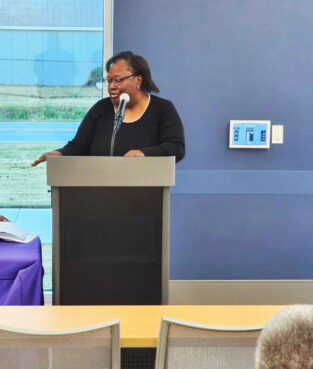
(RNS) — On the first Sunday (May 3) after the Supreme Court decided to hollow out the Voting Rights Act, the Rev. Richelle Lewis-Castine offered some clear advice to her congregation in Patterson, Louisiana.
“I encouraged them to early vote,” said the pastor of an African Methodist Episcopal Church. “I encouraged them to make sure that they get the information, that they’re reading carefully, and to encourage other people — especially those groups in their families who would not normally vote — to vote because it is so very important at this hour.”

Lewis-Castine is among a group of Black clergy taking proactive measures in the wake of the ruling, which is already reshaping election processes across the country — including prompting Louisiana legislators to meet on Friday (May 8) to debate redrawing their congressional maps after the court’s declaration. The 6-3 ruling stated, in the words of Justice Samuel Alito, “That map is an unconstitutional gerrymander,” referring to Louisiana’s second majority-Black district.
The New National Christian Leadership Movement, a faith-based social justice group, announced it would gather pastors and community leaders to protest at the Louisiana State Capitol, where the first redistricting hearing was held in Baton Rouge.
On Friday, social media posts from Baton Rouge news outlets showed a crowd of dozens of people outside the hearing room at the state capitol repeatedly shouting “Shut it down!”
Pastor Debra Morton, co-overseer of the New Orleans-based Greater Saint Stephen Full Gospel Baptist Church, received a text about the protest and shared it with others, including people who joined her for a regular midweek prayer session. In speaking to worshippers, she urged action rather than despair.
“I spoke to our congregation on our prayer call this past Wednesday morning, saying to them, we must, one, vote,” she said, pointing to the capitol event as an example. “In addition to that, not be discouraged, not let it take us down, but that we must go to the polls, and then we must fight.”
During the state Senate hearing, the Rev. Gregory White of Beech Grove Baptist Church in Baton Rouge spoke in support of a bill that would maintain both of the majority-Black congressional districts in Louisiana. He said he didn’t intend to speak at the hearing, but was inspired by the waves of protesters and speakers who voiced opposition to other plans that would eliminate one or both of the districts. He cited Luke 18, referring to a parable Jesus tells in the Bible about a corrupt judge who initially denies a widow seeking justice before eventually relenting due to her persistence.
“Well, you are the judge, and here are the people,” White said, addressing the senators. “And they keep on coming. And they keep on coming. And they keep on coming. I just want you to think about it.”
When he finished speaking, state Sen. Caleb Kleinpeter, a Republican who moderated the meeting, asked the pastor to repeat the passage, then paused to write it down.
RELATED: Black church leaders revive civil rights playbook to mobilize voters for midterms
A few days earlier, African American ministers from across the country and a range of denominations gathered for an online “Emergency Black Clergy Zoom Meeting” hosted by Bishop Erika Crawford, leader of the AME district that includes Louisiana, and the Rev. Barbara Williams-Skinner, co-convener of the National African American Clergy Network. Between prayers led by executives of the Progressive National Baptist Convention and the African Methodist Episcopal Zion Church, other denominational leaders on Tuesday took turns sharing their strategies as legislators in Florida and Tennessee were making new congressional maps that could change the current election season.

Bishop Talbert Swan II, director of social justice ministry for the Church of God in Christ, a predominantly Black Pentecostal denomination, ticked off the various ways his denomination hopes to prepare its members to vote.
“We want every COGIC church to become a voter registration hub — that means setting up registration tables at every service, training volunteers and ensuring that every eligible member is registered, not occasionally, but consistently,” Swan said. “We need accountability. We need to set goals, track registrations, follow up to ensure that those who register actually vote.”
Bishop Charley Hames Jr., chair of the commission on social justice and human concerns for the Christian Methodist Episcopal Church, referred to the Supreme Court decision as a “massacre of our rights,” prompting calls to action in his denomination.
“We put out a call to our church to have, No. 1, designated voter engagement captains at every local church by the first Sunday in June, charged with verifying registration, assisting with mail ballots and organizing rides to the polls,” he said. “We are reenacting Souls to the Polls Sundays, on the Sunday preceding Election Day, encouraging early voting wherever the law permits.”
Hames said there will be renewed initiatives with local NAACP branches, ecumenical groups and Black sororities and fraternities — as have been done in the past — and young adults will be encouraged to become political candidates.
“Whether it is a local race, whether it is the state seat, whether it’s school board, we are engaging our young people to run for office,” Hames said.
Though a range of Black leaders has criticized the high court’s decision, their responses were not monolithic. Some Black conservatives, including members of Project 21, a leadership network of the National Center for Public Policy Research, sided with the high court’s ruling.
“The Constitution demands that government classifications based on race remain the exception — not the rule,” said Linda Lee Tarver, a Christian book author and a Project 21 ambassador and mentor, in a statement. “The legacy of the Civil Rights Movement was to secure equality of opportunity and equal treatment under the law, not to institutionalize racial line-drawing as a default feature of our political system.”

But in Louisiana, the Rev. Marques Smith, pastor of two AME churches in New Orleans that are on the verge of merging, said he has stressed to his congregants that “the decision by the governor disenfranchises everybody,” referring to Louisiana Gov. Jeff Landry’s suspension of the primary elections for U.S. House seats the day after the high court’s decision.
“I encouraged them — you could say, implored them — that they should cast their ballot,” Smith said of his congregants. “The vote has not been canceled. Still go cast your vote. We’re still encouraging early voting so that we as a congregation could be available on voting day to help our friends and neighbors get to the polls.”
During Sunday’s worship service, he said he passed the microphone to an 89-year-old veteran of a march with the Rev. Martin Luther King Jr., who told his fellow congregants that it “hurt his heart” that voting rights debates were continuing.
Black clergy have also rushed to push back against redistricting efforts launched in other parts of the South in response to the Supreme Court ruling.
Clergy in Memphis, such as the Rev. J. Lawrence Turner of Mississippi Boulevard Christian Church, participated in several demonstrations this week to condemn a Republican-led effort to break apart a majority-Black district based in the city. Turner called it a “deliberate restructuring of power” that disproportionately targets “specifically Black communities.” Tennessee Republicans voted to eliminate the district on Thursday, but clergy have vowed to respond with legal challenges and surges of voter turnout.
“We’ve been here before, and every time this nation has tried to draw us out of history, we have found a way to draw ourselves back in,” said the Rev. Earle Fisher, pastor of Abyssinian Missionary Baptist Church in Memphis, in a news conference with other clergy this week.
RELATED: Black America’s ‘twin pillars’ partner to boost vote
Marco and Leo: What they might have said to each other
(RNS) — The reports on Marco Rubio’s meeting with Pope Leo this week were fairly anodyne. Their 45-minute chat was “friendly and constructive,” according to a State Department spokesman. The two “renewed the shared commitment to fostering good bilateral relations,” according to a Vatican statement.
Personally, I’m going with Vatican ambassador Brian Burch’s prediction that the conversation would be “frank.” As in, I imagine, something like the following:
Leo: First, let me get this straight. You started out life as a Catholic, became a Mormon, went to an evangelical church, and now you’re a Catholic again?
Marco: That’s basically right, your Holiness. Kind of like your master St. Augustine. He started off as a Catholic, became a Manichaean, then went back to the faith of his mother, right? Not that I’m comparing myself to him or anything.
Leo: Nice. And as long as we’re on the subject of religious switchers, what’s the deal with your newbie Catholic vice president telling me to be “very very careful” when I’m talking about theology? When he joined the Church, did he miss the part about the pope’s teaching authority?
Marco: I can’t speak for the vice president. Some people I know with a Yale law degree think they’re entitled to shoot their mouths off even when they don’t know what they’re talking about.
Leo: Sounds like you’re throwing him under the bus.
Marco: If the bus fits …
Leo: Bigger question. Why does the president keep saying I’m in favor of Iran having nuclear weapons? He’s got to know I never said anything of the sort.
Marco: Someone told him that by not supporting Operation Epic Fury you were in effect in favor of Iran having nuclear weapons. And between you and me, he thought if he said that, you’d have to say you are against Iran having nuclear weapons and then he could claim the pope supports the operation. Of course, you keep saying the Vatican is against all nuclear weapons, which isn’t the same thing at all.
Leo: No, it isn’t.
Marco: But you know him. Once he gets an idea in his head, it gets stuck in there — like a brain worm. Like, before this meeting he told me to tell you that Iran can’t have a nuclear weapon.
Leo: Well, if he feels so strongly about that, maybe he should have thought twice about pulling out of the nuclear deal Obama made. By the way, how’s that negotiation about Iran getting rid of its enriched uranium going anyway?
Marco: No comment.
Leo: Well, then, let me ask this. Have you ever spoken truth to power when it comes to the president?
Marco: Sure, I have. You can be sure I have. Just maybe not as directly as, well, some people.
Leo: You mean like me saying a couple of days ago that if someone’s going to criticize me for proclaiming the Gospel, let him do so truthfully?
Marco: With respect, your Holiness, he’s someone who doesn’t know what truth is and doesn’t know what’s in the Gospel, so he had no idea what you were talking about. Also, you don’t work for him.
Leo: Well, if you ask me, he’s playing you for a fool. Jerking you around. We have a word in Chicago for people like that. It’s jagoff.
Marco: No comment.
Leo: Well, good luck to you, Mr. Secretary. It was nice to see you again. And you know that olive branch pen I just gave you? Maybe you could explain what it means to the president.
Catholic organizations call on Congress to protect food aid, nutrition programs
In underground breastmilk donation networks, motherhood transcends politics and theology

(RNS) — When the Rev. Kim Sue Jackson, a 41-year-old Episcopal priest and Georgia state senator, started browsing Facebook for breastmilk donors in the Atlanta area, she didn’t think religion would play much of a role in the effort.
Over nine months, she drove through the state to pick up coolers full of breastmilk from mothers she met on the internet, to feed to her son, Khalil. Sometimes, the families giving away their excess breastmilk spoke about their gesture as an act of faith, she said.
One of the first openly gay priests of color in the Episcopal Diocese of Atlanta, Jackson’s search led her to cross paths with mothers and other Christians whose lifestyles and theologies differ from hers. She recalled picking up milk from families who homeschooled their children, viewed raising large families as their faith mission and whose mothers stayed home to tend to their families. Their decision to donate, she said, was born out of the desire to “be a blessing for other families.”

She said her drives through rural Georgia to pick up milk turned into “little moments of connection with people I would have never met otherwise, that we were able to build community around.”
“It was really just the language that they used around like, ‘God has blessed me with this milk’ and in feeling like they had a responsibility to share it, and that it was a blessing to be able to do that,” Jackson told Religion News Service in an interview this week.
Now, Jackson, a Democrat who represents Georgia’s 41st district, is advocating for easier access to centralized milk banks, especially in rural areas. Still, though, she saw a religious silver lining in the outpouring of support from the strangers she met.
“While it would have saved me so many hours … there was something really beautiful and holy about being able to connect one-on-one with all these different moms,” she said of opting for informal sharing rather than milk banks.
While the practice has existed for centuries, more parents turned to informal breast milk sharing during the 2022 baby formula shortage, according to reporting in The New York Times. The uptick was facilitated by the growth of Facebook groups like “Human Milk for Human Babies,” founded in 2010 by Emma Kwasnica, a breastmilk advocate from Montreal, Canada, that connect donors and parents and saw an increase in new users around that time. The virtual communities are run by volunteers, according to HM4HB’s website.
The U.S. Food and Drug Administration does not recommend feeding babies milk obtained directly from individuals, citing safety risks from lack of screening, possible contamination and improper handling.
Although data on the phenomenon is limited, a 2018 study found that 12% of American parents had donated milk, while 7% had fed their babies donated milk. Most do so to clear their stock, though many social media posts also mention wanting to help other families. And for parents who could end up spending between $16 and $20 on a 4 fluid-ounce milk bank bottle, the practice is also appealing from an economic perspective.
Although centralized, institutionalized milk bank systems can offer quick and easy — if costly — solutions for parents in need of milk, those who partake in informal sharing say it has created an opportunity for new parents to come together and share their birth stories. Through the process, as Jackson recalled, meeting in person also allows faith to pierce through, linking strangers around their shared postpartum moment and mutual aid.
In 2023, Jackson and her wife, Trina, became the legal guardians of the 2-year-old son of a member of their church, Church of the Common Ground, which gathers in a downtown Atlanta park and primarily serves unhoused parishioners.
“This is kind of an untraditional process,” Jackson said of how she became a mother. “It was a whirlwind.”
They were propelled into the internet ecosystem of breastmilk nine months later, after taking in their son’s newborn brother.
“My wife had always said a long time ago that if we ended up in a situation where it was us or foster care, we would always choose us for a little Black boy, and so that’s kind of where we found ourselves,” she said, adding their congregation and community pitched in with advice, prayers and baby essentials and helped the couple prepare for the children. Clergy even spent a retreat transforming their office into a child’s bedroom.
But Jackson recalls spending hours scrolling, posting and reacting to posts on Facebook groups like “Human Milk for Human Babies – GA” and “Eats on Feet Georgia” — which, respectively, boast 13,000 and 2,700 members — looking for potential milk donors.

She parsed through parents’ accounts of their children’s history, often detailing traumatic birth experiences, in the hope their stories would compel donors to reach out. Jackson retold the history of her son, who was born a month before he was full term, which resonated with many parents with similar labor experiences. “We just kind of led with that,” she said.
In some corners of social media where women mix motherhood with Christian lifestyle content, breastmilk donation has also become a trending topic.
Breanna Seibel, a 34-year-old nurse living in Wisconsin, is one of many creators on TikTok who promote donating breastmilk as a holy act of service, using the tags #Breastfeeding and #ChristianTok.
Seibel’s twins were born three months premature in 2022. The eldest baby died after three days, while the other underwent a lifesaving heart surgery. As she began producing milk for both, she considered donating the surplus to others. In her small community, Seibel made a name for herself as a breastmilk donor as she answered donation calls on groups like Human Milk for Human Babies, she said.
In late April, the content creator, facing the camera and leaning on her kitchen countertop, said to her 263,000 TikTok followers that though her faith was “greatly shaken” after giving birth to her twins, breastmilk donation helped her find a purpose that aligned with her faith values.
“I believe that we have found purpose through our pain through breast milk donation and helping other moms be able to keep their babies when I wasn’t able to keep mine,” she said in a recent Zoom interview with RNS, wearing a light blue cap reading “JESUS SAVES” and a diamond-encrusted cross necklace.
Seibel, who also posts about her Catholic faith, added that donating has given her the opportunity to be “walking in Jesus’ footsteps.”
Rebecca Goldberg, a physical therapist from Decatur, Georgia, said she started donating during the COVID-19 pandemic — a time when people “were desperate for breast milk.” She’s also a friend of Jackson’s, and in their first month sourcing milk, Jackson and her wife relied on Goldberg to breastfeed their son.
Goldberg, who is Jewish, views donating primarily as a way to contribute positively to her community during a time of global hardship, but she also sees parallels between donating and the teachings of the Jewish philosopher Maimonides, who ranks giving to strangers among the highest levels of good deeds.
“In a Facebook forum, technically, I know them,” she said of families to whom she has donated. “But if I were to pass them on the street, I wouldn’t know who they were. I certainly wouldn’t know their children’s faces.”