Sidebar
Religions Around The World
World Religions News
Ahead of vote in France, bishop calls for prayer and fasting to defeat euthanasia bill
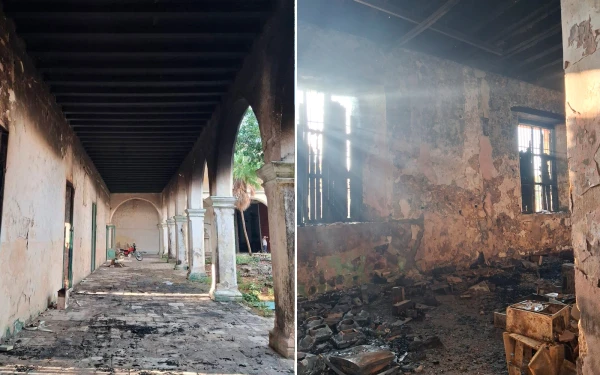
Piarist Fathers demand Cuban regime return their cloister and school
Abraham Foxman was a warrior against hate. His work is hardly complete.
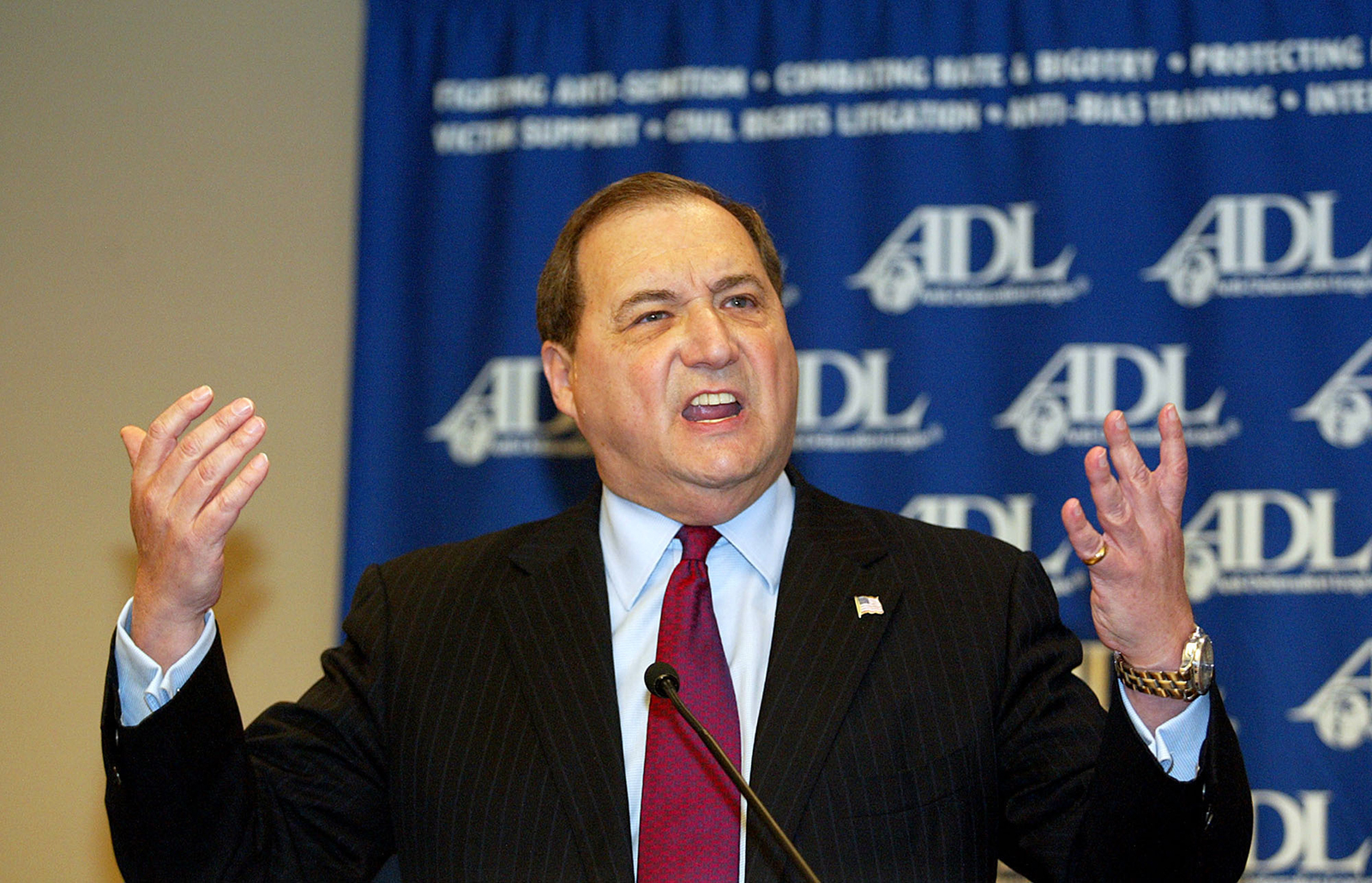
(RNS) — Right about now, the angels in the world to come are tearing their hair out.
That is because Abraham Foxman has arrived. They will never know what hit them.
Abe Foxman, the longtime national director of the Anti-Defamation League, died Sunday (May 10) at the age of 86. He joined the organization in 1965 — fresh out of New York University Law School — and served for 50 years, 28 of them as national director. He made the ADL into one of the world’s foremost civil rights advocacy organizations and was the unquestioned dean of the alphabet soup system of Jewish legacy organizations.
And, I dare say that even he could not have predicted the wave of antisemitism we are now experiencing — the very thing he spent his entire life fighting against.
About 13 years ago, during a professional transition, I spent a year working for the ADL. I had long admired its mission and its purpose. I appreciated how their scope went far beyond antisemitism in how they protested discrimination against Black people, immigrants and LGBTQ+ people. Having lived in Atlanta, I was quite familiar with the ADL’s origins — specifically its founding in 1913 in the aftermath of the Leo Frank lynching case, which had happened in that city and traumatized the Jewish community.
When I started working at the ADL, I didn’t quite anticipate the direction my work would take. Abe had seen the documentary film “Bully,” which depicted the devastating impact of bullying on young people — some of whom had taken their own lives. It moved him profoundly. He shifted the ADL’s focus, at least in part, toward anti-bullying measures.
The film moved me as well — not least because I, too, had been the target of bullying as a kid, both because I was Jewish and was a bit of a geek. The anti-bullying initiative shaped my work with the ADL even more perhaps than antisemitism. My role involved visiting public schools around New Jersey, teaching the ADL’s anti-bullying curriculum and training educators to foster resilience in themselves, their staffs and their students.
Reflecting on it now, I see those efforts more clearly than I did then. The bullying I learned about was aimed at students in elementary schools and middle schools who were overweight, LGBTQ+ or neurodivergent. I could not have imagined that the same dynamics would migrate to college campuses, with Jewish students becoming the primary targets.
Abe was a complex man. He could be cantankerous, volatile, occasionally exasperating and always a force of nature. He could be loving and sentimental. When I told him that I wanted to return to the pulpit rabbinate and to my writing, he said: “That was always your passion, Rebbe.” With the intonation of that Yiddish title, a remnant of his Eastern European background, there was a twinkle in his eye.
But, whatever else Abe was, he was always precise and consistent in his messaging. One lesson I learned from him I have never forgotten.
At a staff retreat, Abe addressed the question of how to respond when someone says or does something antisemitic or hateful. His instruction was counterintuitive and brilliant.
Look, he said, “don’t ever call someone an antisemite. Don’t call someone a bigot, and especially in print. Don’t sink to name-calling. Why? First, because once you do that, it is as if you have drawn a pistol.”

But it was his follow-up point that grabbed me.
“And second,” he said, “you can’t see into someone’s soul. You don’t know who someone really is.”
Then, he told us what to do instead.
“Address the action, not the personality. Tell the person: ‘You are using antisemitic language.’ ‘You are spreading bigoted ideas.’ ‘What you are doing is hateful.'”
It was pure Foxman — sharp, practical and morally serious. He understood that you change behavior before you change hearts, and that the language of accusation rarely persuades anyone of anything.
But what moved me the most about Abe was his story.
He was born in 1940, in what is now Belarus. When the Germans forced his parents into the Vilna Ghetto in 1941, they entrusted their infant child to the care of their Polish Catholic nanny, Bronisława Kurpi. She baptized him, gave him the name Henryk Stanisław Kurpi and raised him as her own son — a practicing Catholic — and hid his Jewish identity.
After the war, his parents returned to reclaim him. But Kurpi did not want to give him up.
His parents ultimately won the custody battle, and the family immigrated to the United States in 1950.
Sit with that, for a moment. A Polish Catholic woman, in the middle of Nazi-occupied Europe, chose to risk her life to save a Jewish infant. It was not a passive act of decency. In those years, hiding Jews was a death warrant. She knew that. She did it anyway.
When I think of Kurpi, I think of the unnamed daughter of Pharaoh, who saves the infant Moses floating in a basket down the Nile. The ancient rabbis imagined that at the moment she heard the infant’s cries, her arm elongated itself, and she could reach the child in the middle of the river.
Kurpi did what conscience demanded even when the world around her had abandoned conscience entirely.
For many decades, Abe Foxman carried that story with him. I would like to believe that it was the foundation beneath everything else he did. It influenced his speeches, press releases and confrontations with heads of state, and his decades of relentless advocacy — not to mention the numerous times that he engaged with those, some of them quite famous, who expressed bigoted ideas to tutor them and make them into better versions of themselves. He knew that individual human beings possess the capacity for moral courage even in the darkest of times. He had the scar — and the blessing — to prove it.
In the end, what made Abe Foxman so consequential was not just what he fought against. It was what he fought for — the stubborn, battle-tested conviction that hatred is not inevitable, that the better angels of human nature are real and that they are worth defending.
What are you going to do, dear reader — Jew or gentile — to honor his memory?
Abraham Foxman, antisemitism umpire for the ADL, dies at 86
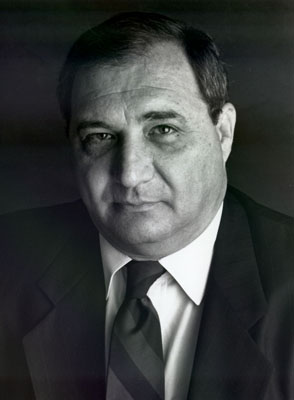
(RNS) — People used to joke that Abraham Foxman, the longtime national director of the Anti-Defamation League, was the “Jewish pope” for his frequent comments on any attack on Jews around the world.
A better description might be top cop.
During the late 20th century, Foxman — who died Sunday (May 10) at age 86 — was one of the most recognized American Jewish leaders for his regular pronouncements whenever he perceived antisemitism. As the national director of the ADL for almost three decades, he built up the organization into a formidable agency that tracked antisemitism and other forms of extremism.
His successor, Jonathan Greenblatt, described him as “an iconic Jewish leader who embraced the ideal of an America free from antisemitism and hate and who strongly believed that these scourges could be defeated if good people opposed it,” in a statement mourning his death.

The American Jewish Committee in a statement said, “Abe brought moral clarity, courage, and unwavering conviction to generations of advocacy and leadership.”
To New Yorkers and others across the country, he might better be remembered for the punchy indignation with which he spoke.
“He was more quoted than every other Jewish leader put together because he was so good at giving people the quote they needed at that moment,” said Eric Alterman, a journalist, scholar of U.S. Jews and the author of “We Are Not One: A History of America’s Fight Over Israel.”
Foxman was known for admonishing and correcting those caught making anti-Jewish statements — whether it was actor Mel Gibson, whose 2004 movie, “The Passion of the Christ,” was viewed as depicting Jews as responsible for the death of Jesus; former CNN anchor Rick Sanchez; or the late civil rights leader Jesse Jackson.
Alterman said Foxman led the ADL at a time when, at least publicly, it viewed stopping the defamation of the Jewish people as also fighting for the rights of immigrants and LGBTQ+ people. Under his leadership, it opened regional offices across the country, hired experts to monitor antisemitism, conducted diversity training for law enforcement and developed programs for schools. At his retirement in 2015, the ADL had 300 employees and a $60 million annual budget.
But the ADL was never a left-leaning organization. In 2010, Foxman was sharply criticized by some for opposing building the Park51 Islamic center, also known as the Ground Zero Mosque, in lower Manhattan. Conservative media at the time warned against the mosque, located two blocks from the World Trade Center, and Foxman chimed in saying the mosque at this location would be “counterproductive to the healing process” after 9/11.
Foxman also praised Daniel Pipes, a prominent anti-Muslim commentator, and donated to his Middle East Forum organization.
Emmaia Gelman, a scholar whose book, “The Anti-Defamation League and the Racial State,” will publish next month, said the ADL under Foxman saw its role as propping up the U.S. and Israel as defenders of law and order. In 1993, in what became known as the spying scandal, the ADL was accused of conducting an illegal surveillance operation on thousands of civil rights groups critical of the U.S. or Israel. The group denied the allegations of illegality but accepted a court-ordered settlement.
“We are sort of primed to think of the ADL as surveilling white nationalists and the extremist right,” Gelman said. “But in fact, since the late ’60s, the ADL had been surveilling the left as well.”
In retirement, Foxman became critical of the new direction of the ADL. After Donald Trump held a campaign rally in Madison Square Garden two years ago, Foxman slammed it as a spectacle of antisemitism, racism, xenophobia and misogyny. He took particular aim at current CEO Greenblatt, who criticized a CNN guest but never mentioned Trump’s rally that happened around the same time.
“I’m reluctant to criticize my successor,” Foxman told the Jewish Telegraphic Agency. “But, hello, he went after this guy on CNN yesterday, and couldn’t mention Trump, it’s a little bizarre.” Foxman endorsed Democratic candidate Kamala Harris in the 2024 election.
Foxman also became more critical of Israel, especially the Netanyahu government’s judicial overhaul. In 2024, he described Prime Minister Benjamin Netanyahu as a “liability.”
Foxman was born in Poland in 1940, in what is now Belarus. At 15 months, Foxman’s parents entrusted him to his Polish Catholic nanny to avoid having to relocate to a Jewish ghetto. She baptized him to hide his Jewish identity and raised him as a Catholic. In 1946, he was reunited with his parents, first living in a displaced persons camp in Austria before immigrating to the United States in 1950.
He attended City College of New York and studied law at New York University, graduating in 1965. From there, he joined the ADL as an assistant director of legal affairs in 1965, and eventually became its director.
Foxman is survived by his wife, Golda, his children, Michelle and Ariel, and four grandchildren.
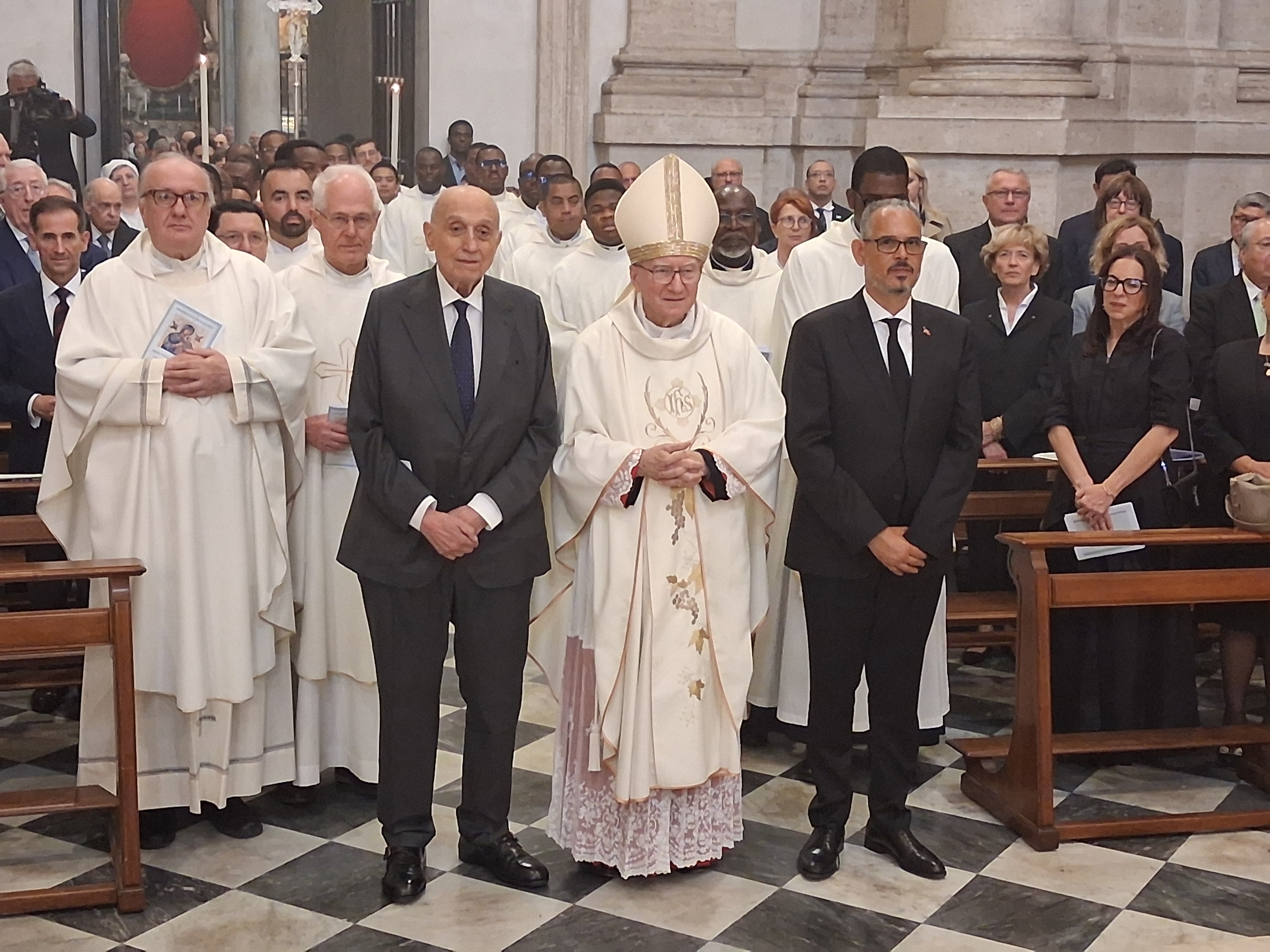
Haitian prime minister meets Pope Leo, inaugurates new Vatican embassy
Elaborately decorated skeletons in Catholic churches across Bavaria take some visitors by surprise
BAD STAFFELSTEIN, Germany (AP) — It is a sight that has sent shivers down the spines of many visitors: four complete skeletons draped in silk and brocade, adorned with precious stones, filigree gold, silver and lace that have been on display for centuries at the Catholic monastery church of Banz in southern Germany.
The skeletons — known as Vincenzius, Valerius, Benedictus and Felix Benedictus — are the remains of so-called catacomb saints that were brought to the Benedictine monastery near the Bavarian town of Bad Staffelstein from Rome in the late 17th and 18th century.
“It’s actually a little creepy,” whispered church custodian Anita Gottschlich as she looked at one of the skeletons. It seemed to be staring right back at her through its hollow eye sockets.
“I notice that when older people come here who visited as children, they always look for the Holy Bodies, because they can still remember them,” she added, noting the enduring fascination the skeletons hold for people of all ages.
While they may seem unfamiliar or even disturbing to some visitors, catacomb saints — or Holy Bodies — can still be found in many Baroque Catholic churches and monasteries across Bavaria.
The skeletons, often presented in glass coffinlike cabinets, are also a familiar sight in churches in neighboring Austria, Switzerland, Czechia, and in Italy.
Holy Bodies are remains found in Roman catacombs in the Middle Ages
Legend has it that these relics are the remains of martyrs from the early days of Christianity in Rome that were discovered in the 16th century in unmarked graves in the city’s catacombs.
“At the time, the church simply designated them all as saints,” said Catholic priest Walter Ries. “And, of course, in many countries, including Germany, people wanted to have such holy remains, such relics, simply because this enhanced the status of their own church or monastery and perhaps turned it into a place of pilgrimage.”
Ries is in charge of several parishes in and around Bad Staffelstein, including the congregation of 211 members that belongs to the monastery church. It’s a far cry from the golden age of the monastery, which was founded by Benedictine monks in 1070 and flourished for hundreds of years until it was dissolved in 1803. Nowadays, only the church is still actively in use; the monastery is home to a political foundation.
“A great deal has changed over the course of the centuries,” the priest said. “Back then, these relics were very important, but today they really aren’t anymore.”
Catacomb saints were supposed to help believers deal with misery
The veneration of the catacomb saints during the late 17th and 18th centuries came at a time when vast stretches of Europe, including Bavaria, were still reeling from the Thirty Years’ War. It began as a religious struggle between Catholics and Protestants and led to an estimated 4 to 8 million deaths from the effects of battle, famine or disease.
“That was a terrible time,” said Ries. “And so people tried to open the gates of heaven through the Baroque. That’s why everything was designed so beautifully. It was an escape from the present, which was often so terrible. That’s also why these eerie skeletons were so beautifully draped and depicted as lifelike as possible.”
The abbots of the Banz monastery and the church, which is ostentatiously adorned with lots of gold, cherubs and paintings in the Baroque style, sent emissaries to Rome in 1680 and again in 1745, who successfully brought home the four skeletons which were then decorated by nuns in the nearby town of Bamberg.
For the faithful, a glimpse of what they’d look like after resurrection
To ensure that viewing the Holy Bodies was an exceptional experience, they were and are still kept out of sight for most of the year by attaching wooden panels depicting the respective skeletons to the front of the display cases. On special occasions, such as All Saints’ Day, the covers are taken off and the Holy Bodies are shown to the believers.
In general, the elaborate decoration “is not meant to show the dead body of a saint, but rather to show his glorified body,” said Günter Dippold, a historian who has been researching the catacomb saints and the Banz monastery.
“It is therefore intended to show the faithful who view it what we will look like after the resurrection, after being raised from the dead, when we no longer have our earthly bodies but rather glorified ones.”
___
Associated Press religion coverage receives support through the AP’s collaboration with The Conversation US, with funding from Lilly Endowment Inc. The AP is solely responsible for this content.